INCARNATE – IF THERE IS A GOD, LET HIM STRIKE ME DEAD RIGHT NOW

Most of us have heard the age-old story about the unbelieving professor. He stands in front of his class and demands that there is no God. “If there is a God,” he challenges, “then let Him strike me dead right here and now.” He pauses for dramatic effect and waits 30 seconds. When nothing happens, he proclaims his atheistic position as the victor and gloats, “Just as I suspected, I’m still alive. There is no God.” Supposedly, just because God does not do exactly as he demands at that particular instant, then that proves there is no God. But let’s critically assess this emotional appeal (because it certainly is not a logical argument) and see how we could rationally respond to it.

Is it true that someone who has the power to do something should always do it when called upon to do it? For instance, suppose a criminal robs a bank and murders several people. A policeman arrives on the scene pointing his pistol at the criminal. The criminal drops his gun and begins to taunt the cop. “You gonna shoot me with that gun? I bet you don’t even have any bullets loaded. You are probably a terrible shot anyway. If you do have a loaded gun, and you think you could hit me, go ahead. Pull the trigger. Shoot me, if you are a cop.” If the policeman has a loaded gun and is a good shot, should he shoot the criminal, just to prove that he can? Of course not. There could be some very good reasons why the policeman, when taunted to show his power, refuses to respond.

Now think about our professor. He demands that God kill him on the spot to “prove” that God exists. He is taunting God just as the criminal did the policeman. Could there be legitimate reasons as to why God does not strike him dead? Certainly. Maybe the professor is going to convert to Christianity in several years and be a strong force for good in the world. Maybe the professor is going to teach one of his students something about medical science that leads that student to find a cure for cancer, and that student ends up being a Christian who gives God the glory for the discovery. Maybe the professor is going to have a child that rebels against his father’s atheism, becomes a Christian and does mission work for many years. Since God is the only being Who knows all the possible ramifications of every thought and action, only He would be in a position to know how to respond in such a situation.

Throughout the course of human history God has worked His will through miraculous and through what we would call natural means (often called providence). In many eras of history He has used both at the same time; but in some instances and epochs, He has worked primarily through providence with very little or no recognizable miraculous activity. It is important to understand this truth, since it is often affirmed that if God has worked miracles in the past to aid His people, then He “should” be doing the same today. For instance, agnostic professor Bart Ehrman demands, “If he [God] could do miracles for his people throughout the Bible, where is he today when your son is killed in a car accident, or your husband gets multiple sclerosis, or civil war is unleashed in Iraq, or the Iranians decide to pursue their nuclear ambitions?”1 This idea is well-illustrated on Marshall Brain’s Web site whywontgodhealamputees.com. According to Brain, the fact that God does not miraculously regrow limbs proves that He is imaginary. He says, “Nothing happens when we pray for amputated limbs. God never regenerates lost limbs through prayer…. Does God answer prayers? If so, then how do we explain this disconnection between God and amputees?”2

Notice that Brain, Ehrman, and the atheistic professor insist that if God is capable of miracles (or striking a person dead), then we should see those things happening today. But why must that be the case? Could it be that an all-knowing God has very good reasons why He is not at work in the same miraculous ways He worked in the past? In addition, the same Bible that tells us about God’s miracles also lays out a very strong case for God working through providential means. To demand that God must operate in the way that we insist He operate is more than slightly presumptuous, especially in light of the fact that He has given us ample information about other ways He works.

Ehrman and other unbelievers challenge Christians to produce modern miracles as evidence that God intervenes in the world today. They do so, however, refusing to recognize two important truths. First, even during the ages of human history when God performed miracles, He did not intervene to stop all suffering. People still got sick, had accidents, broke bones, suffered emotionally, and died. It is as if the skeptic insists that the Bible paints a picture of a God who swooped in miraculously to stop all suffering. Such was never the case. Miracles were isolated events designed to confirm the validity of the message of certain divine messengers.3 The Bible has never presented them as a wholesale answer to the problem of pain and suffering. Second, to insist that God must use miracles today just because He has the power to do so discounts the pervasive biblical theme of providence. Throughout history, one of God’s primary modes of operation has been to providentially work through natural laws. To deny that this is the case is to turn a deaf ear to a massive amount of biblical testimony. BY KYLE BUTT, M.DIV.

ENDNOTES

1 Bart Erhman (2008), God’s Problem: How the Bible Fails to Answer Our Most Important Question—Why We Suffer (New York: HarperOne), p. 274.

2 Marshall Brain (2014), “Why Won’t God Heal Amputees?” http://whywontgodhealamputees.com/.

3 Dave Miller (2003), “Modern-Day Miracles, Tongue-Speaking, and Holy Spirit Baptism: A Refutation,” Apologetics Press, https://www.apologeticspress.org/APContent.aspx?category=11&article=264&topic=293.

“GOD LOVES YOU AND I LOVE YOU AND THAT’S THE WAY IT’S GONNA BE!” – MIKE
INCARNATE – THE TRUTH ABOUT CHRIST’S CHURCH

There may be some things in the Bible which are difficult to understand, but there are others which are so simply stated but often are easily overlooked. Two of these truths are that Jesus established the church and that He never wanted it to be changed.

The rock and foundation, the pattern, never changes.

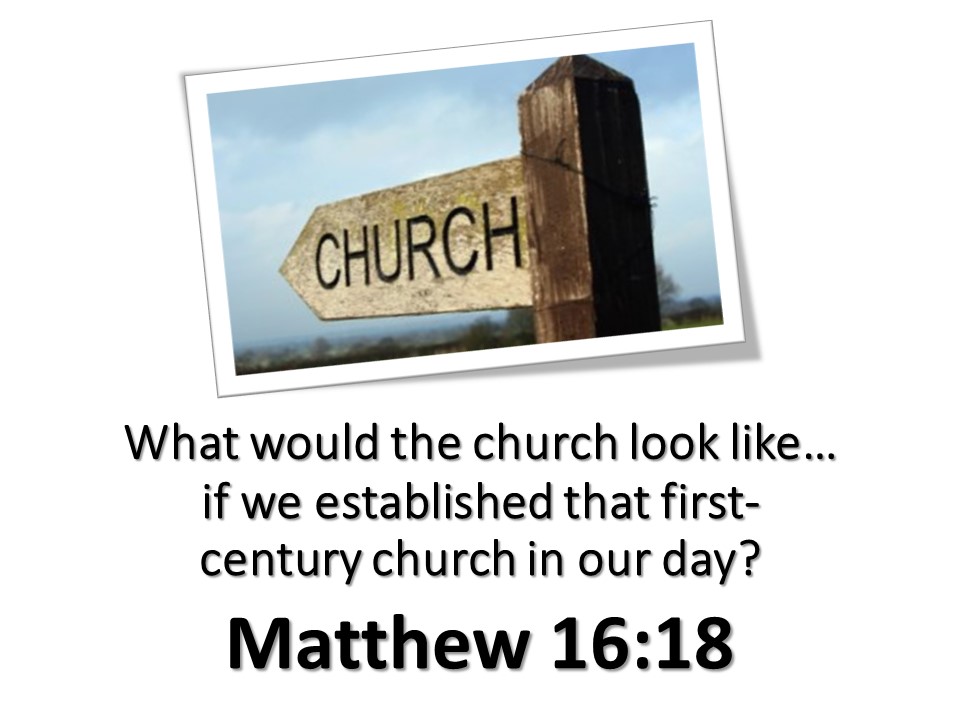
Read Matthew 16:18 and notice how easy it is to understand the promise Jesus made before He died about what was about to happen. “I will build My church.” Even a child can grasp these words. Continue to read the Bible, and you will see exactly what happened. Just days after He ascended into heaven that church became a reality, and men were added to it (Acts 2:38-47). We must never overlook this truth so plainly stated.

Read the words in Matthew 16 which follow His promise to build the church. He said to Peter, “Whatever you bind on earth will be bound in heaven and whatever you loose on earth will be loosed in heaven.” Two chapters later, He expanded this right to reveal God’s message bound upon all men to include others (Matt. 18:18). For the church to exist, there was a new testament which was about to be revealed, but when that truth was bound on this earth it was bound in heaven. We must not overlook this truth so simply stated.

To see how firmly this new way of living was binding on man, read the words of the apostle Paul. “I marvel that you are turning away so soon from Him who called you in the grace of Christ, to a different gospel, which is not another; but there are some who trouble you and want to pervert the gospel of Christ” (Gal. 1:6-7). The truth was so firmly bound on mankind that to change it is described as a perversion.

Then, read the next verse to see that the gospel could not be changed. “But even if we, or an angel from heaven, preach any other gospel to you than what we have preached to you, let him be accursed.” Do you see how easily these words show that the Lord never gave any man, including the apostle Paul, or any angel from heaven to change the truth that was revealed?

Yet, it is so easy to overlook these two truths. God first gave that Old Testament to the Jews and only God Himself could change it (Deut. 4:2; 12:32). When Jesus gave us the New Testament, He gave this same message—do not change it. How tragic it is that since Jesus left the earth men have changed the church and changed the truth bound on us in so many ways.

What would happen if all those who believed in Jesus decided to return to the simple truth given by Jesus and the apostles? What would the church look like if we established that first-century church in our day? Think about it! BY DAN JENKINS

“GOD LOVES YOU AND I LOVE YOU AND THAT’S THE WAY IT’S GONNA BE!” – MIKE

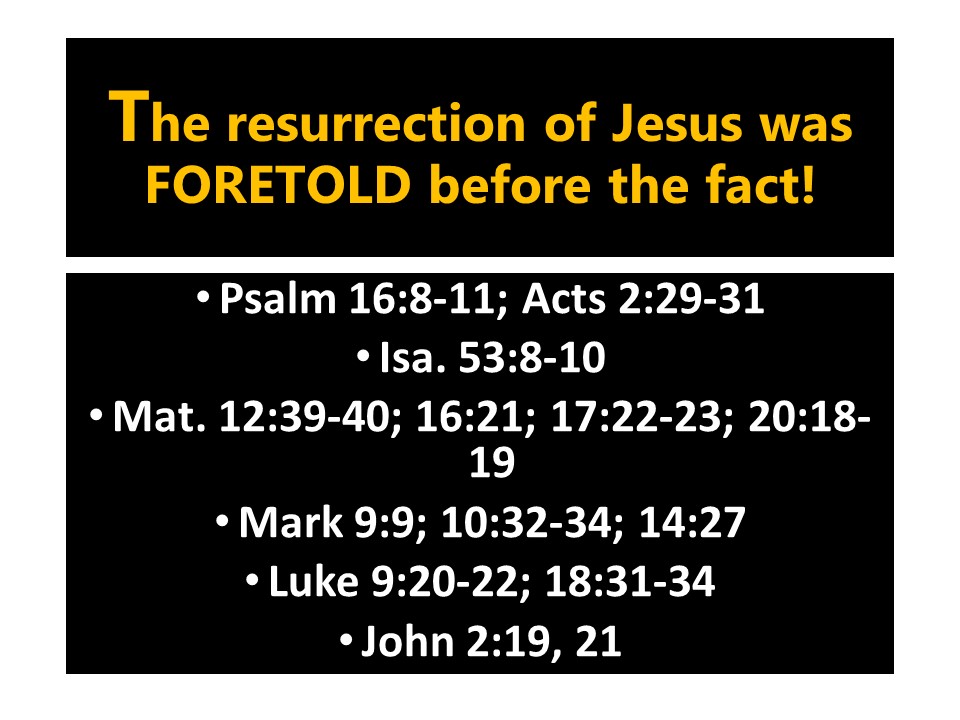
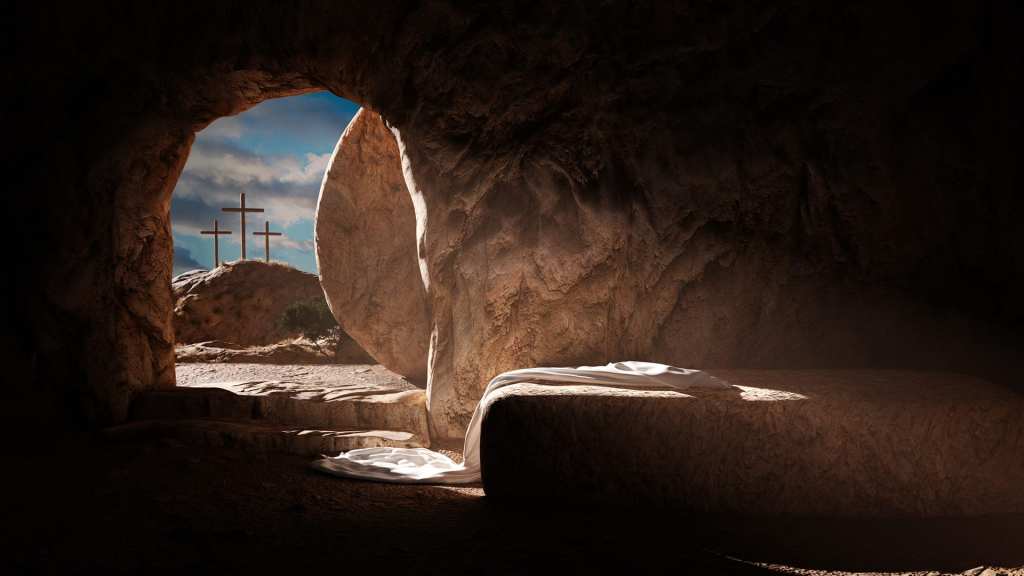
INCARNATE – GROWING DOUBTS ABOUT THE RESURRECTION

In his defense before Agrippa, Paul asked his Jewish audience: “Why is it judged incredible with you, if God doth raise the dead?” (Acts 26:8).

There have always been those who found the concept of the bodily resurrection incredible, i.e., unbelievable, and their modern counterparts are appearing increasingly—even in today’s church.

False Ideas

The ancient Greeks disdained the notion that the body could ever be raised. Thus when Paul spoke concerning “the resurrection of the dead [ones—plural]” in Athens, his message was mocked (Acts 17:32). During the time of Jesus, the Sadducees denied the resurrection of the body (Matthew 22:23; Acts 23:6-8).

Even some Christians in the primitive church had fallen for this error and so affirmed: “There is no resurrection of the dead” (1 Corinthians 15:12)—a heresy which Paul attempted to correct. In the late decades of the apostolic age, a sect known as the Gnostics arose, denying the resurrection of the body.

In our own age, atheism, of course, rejects the idea that the human body will be raised from the dead. An article in the Soviet Encyclopedia asserts that the concept of the resurrection is in “decisive contradiction with scientific natural knowledge” (Smith 1999, 455).

Religious modernism repudiates the idea of the resurrection, since, having “demythologized” the Scriptures, it rejects any element of the miraculous.

Cultish groups also have a problem with the doctrine that God will raise the body. The Jehovah’s Witnesses assert that the incorrigibly wicked “will never be remembered for resurrection” (Make Sure of All Things 1953, 314).

Within the churches of Christ, those who have converted to the dogma of Max King deny the resurrection. Like Hymenaeus and Philetus, men who erred in Paul’s day, these brethren suggest that the resurrection is past already (2 Timothy 2:17, 18), having been spiritually effected in A.D. 70 with the destruction of Jerusalem (see The Menace of Radical Preterism).

Whether ancient or modern, within the church or outside of it, the denial of the bodily resurrection is radical error. And in this age of biblical illiteracy, this false doctrine will continue to make its presence felt among the people of God unless gospel preachers return to a teaching of the fundamental principles of the Christian faith, one of which is the resurrection of the dead (cf. Hebrews 6:1, 2).

The Bible and the Resurrection

The Bible clearly affirms the doctrine of the general resurrection of the dead. Note, in brief, the following points.

Old Testament Evidence

The concept of the resurrection is found in the Old Testament—though not as vividly as it comes to light in the New Testament (cf. 2 Timothy 1:10). God’s declaration to Moses regarding Abraham, Isaac, and Jacob was an indication of the eventual resurrection (Matthew 22:31, 32). Other Old Testament passages also suggested that man’s body would be raised ultimately (see Job 19:25-27; Psalm 17:15; Isaiah 26:19; Daniel 12:2; Hosea 13:14).

New Testament Evidence

The doctrine of the bodily resurrection is affirmed abundantly in the New Testament (see John 5:28, 29; 6:39, 40; Mark 12:18-27; Acts 17:32; 26:8; Romans 8:23; 1 Thessalonians 4:16; 1 Corinthians 15; 2 Corinthians 5:1, 2; Philippians 3:21).

How any person could read Paul’s great discussion of the eventual disposition of the dead in 1 Corinthians 15 and not believe in the resurrection has to be one of the mysteries of the ages. In that remarkable chapter the apostle develops his line of argumentation in the following fashion:

(1) Paul persuasively pled for the bodily resurrection of Jesus Christ on the basis of numerous eyewitnesses of the risen Lord, which, on one occasion, consisted of more than five hundred people (15:1-11).

(2) The apostle maintained that the Lord’s resurrection is Heaven’s guarantee that we too shall be raised. Jesus is the “first-fruits” (a figure suggesting a future harvest) of the general resurrection to be effected at the time of his return (vv. 12-34).

(3) Paul discussed the nature of the resurrected body. It will not be a physical or a corruptible body; rather, it will be spiritual and incorruptible (vv. 35-49). Nevertheless, there will be an identity continuum between the former body and the new one. Only in this light can the term “resurrection” (which means to stand up) have any relevance.

Moreover, each body will have its own individuality (v. 38). Further, it is thrilling to reflect upon the fact that our new bodies will be identical in form to the glorious body of our resurrected Lord (see Philippians 3:21).

(4) Finally, the theological impact of the resurrection is set forth. It is a declaration of victory (vv. 50-57). In view of this great hope, saints are admonished to persevere in their fidelity (v. 58).

The biblical doctrine of the resurrection of the dead is a comforting concept. Those who would rob us of this hope are not friends of the cause of Christ. BY WAYNE JACKSON, DECEASED AT https://www.christiancourier.com/articles/265-growing-doubts-about-the-resurrection-of-the-dead

“GOD LOVES YOU AND I LOVE YOU AND THAT’S THE WAY IT’S GONNA BE!” – MIKE