Author: imikemedia
Christian. Husband. Father. Grandfather. Evangelist. Son.
INCARNATE – THE SAMARITAN WOMAN
In John 4, our Lord ministered to a variety of people because they had faith in Him. For example, the Samaritan woman. Samaria was a place hated by many Jews because they were a mixed race, part Jew and part Gentile which stems back to the Assyrian captivity in 727 B.C. And, since the Jews in just about every way rejected them, the Samaritans even had their own temple and religious services on Mt. Gerizim.
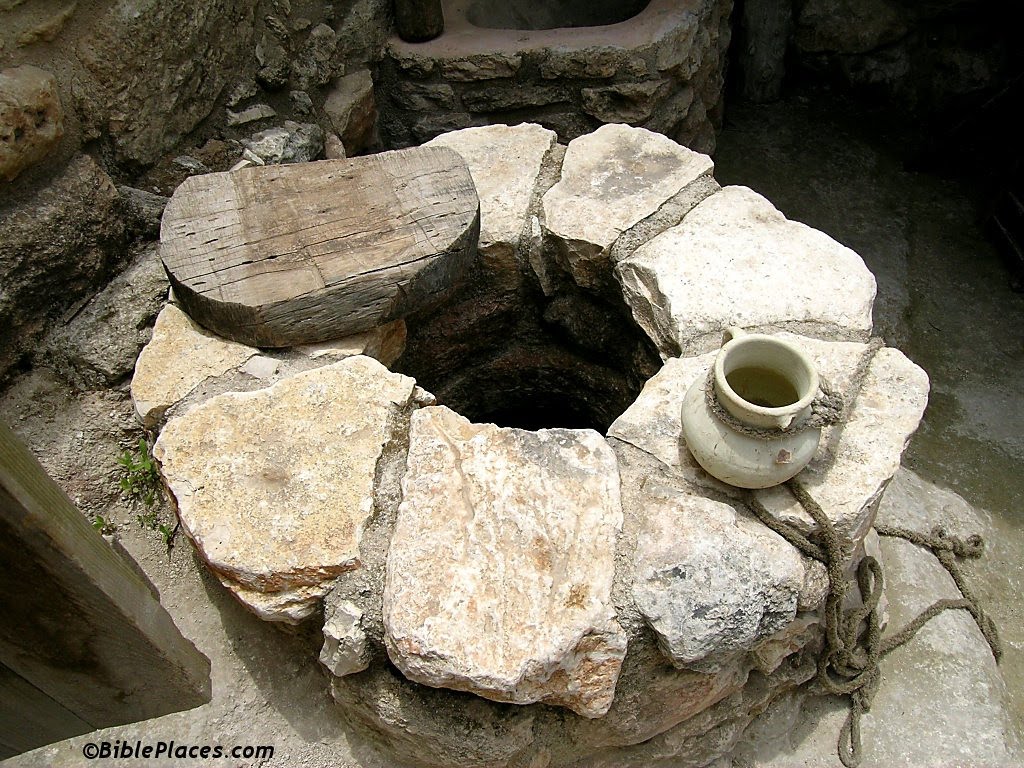
Well, as Jesus left Judea and started toward Galilee, his journey went through Samaria, where he met this woman at Jacob’s well around noon, which was the usual time for women to come for water. Well, it was not considered proper for any man to speak in public to a strange woman (Jn. 4:27). But, customs aside, Jesus opens the conversation with, “Give me to drink” which became a way to share the truth about “living water.” See, Jesus adapted this situation, as we should, about speaking of the ways of God to others. And so, Jesus offers her eternal life (Jn. 1:26).
As Jesus speaks about spiritual waters, the woman at the well interpreted his words as literal water (vs. 11-15) and she was concerned about how He would obtain the water. Well, Jesus said, “Whosoever continues to drink of this material water (or anything the world has to offer) will thirst again. But whosoever takes one drink of the water I give will never thirst again!” And, how true it is that the things of this world never completely satisfy. Even in torment today, people are crying, “I thirst!” Well, the woman’s immediate response was to ask for this gift, but she did not know what she was saying.
Beginning in vs. 16, Jesus begins prepares the soil of her heart, which begins with conviction, which is why Jesus told her to go get her husband. Jesus aroused her mind and stirred her emotions, but in doing so, he touched her conscience, and that meant dealing with her sin. So she said, “I have no husband” because now she was under conviction and her “mouth was stopped” (Rom. 3:19). But, instead of Jesus bashing her because of her sin, he teaches her about her religion and revealed her spiritual ignorance in that: she did not know who to worship, where to worship, or how to worship! Jesus was showing that not all religions are acceptable before God and that some worshipers act in ignorance and unbelief. Only those who obey the truth can worship God acceptably (Jn. 4;23-24). This ignorance is further exposed by Stephen (Acts 7) and by Jesus (Jn. 3:1-7).
Well, despite her ignorance, in vs. 25-30, there was one truth this woman did know: the Messiah was coming and would reveal the secrets of hearts. This truth was buried in her heart until that very hour, and now here the Lord says, “I that speak to thee, am!” At this point, the woman put her faith in Jesus Christ and immediately wanted to tell others, so she went into the village and told the men she had met the Christ. And, she was in such a hurry to tell others, she left her waterpots behind (vs. 28) with the intentions to come back.
Now, during this time, the disciples had gone to buy food (vs. 8) and upon returning, they were shocked that Jesus was speaking to a Samaritan woman (vs. 31-38). And, after the woman left, they urged Jesus to share the meal with them, because they knew that He was hungry. Instead though, Jesus said, “I have food to eat that ye know not of”. Well they did not understand this in which Jesus explained that doing the Father’s will, in this case, leading the woman to faith in Him, was true nourishment for his soul. So, while the disciples were satisfied with bread, Jesus was satisfied with accomplishing the Father’s work as we should be or as the psalmist said, “I delight to do Thy will, 0 my God; yea, Thy Law is within my heart” (Ps. 40:8).
Next in his conversation with his disciples, Jesus speaks of the harvest and quoted a familiar Jewish proverb about waiting for it as he is pointing to the villagers coming out to the well to meet Him, thanks to the woman. Here it is interesting that the disciples went to the village to buy food. But, the woman went into the village to teach others, like we are to plant the seed of God’s word (Matt. 13; 1 Cor. 3:6-9). Yet, it is interesting that the text indicates that others had labored in Samaria and had prepared the way for this harvest (vs. 38). Now, we don’t know who they were, but the disciples were learning here that they were not alone in the work of the Lord and must never look on any opportunity for teaching as wasted time and energy. It takes faith to plow the soil and plant the seed, but God has promised a harvest (Ps. 126:5-6; Gal. 6:9).
Well as I said, in vs. 39-42, many of the Samaritans believed because of this woman and were so excited about Him, that they begged Him to stay with them; and He stayed for two days. During that short time, His word produced fruit in their lives. These people trusted in what the woman said and soon trusted the Word taught by the Savior and declared him the Saviour of the world (vs. 42). This unnamed Samaritan woman was a fruitful believer: she bore fruit (“many believed”), more fruit (“many more believed”), and today continues to bear “much fruit” to the glory of God (Jn. 15:1-5). Nobody knows how many lost sinners have come to the Saviour because of the teaching of this woman recorded in John 4.
Well, in vs. 43-54, Jesus leaves the country and continues his journey to Galilee and came to Cana where he attended a wedding feast where the first miracle is recorded and came at the request of His mother (John 2:1-5). But then, we see a second miracle at the request of a nobleman to heal his dying son (vs. 47) in which our Lord seems to lament over the spiritual condition of the people in general. But, the nobleman made two mistakes in his thinking: that Jesus had to go to Capernaum to save the lad, and that if the boy died meanwhile, it was too late. So, Jesus simply said, “Go thy way; thy son liveth” (John 4:50) and so, the man believed Jesus and started to return home and as he went, his servants started out to find him so they could share the good news that the boy had been healed at the seventh hour, which, in Roman time, would be 7 o’clock in the evening. When the father and the servants met the next day, their report confirmed his faith. Indeed, the boy had been completely healed! This is one of a few miracles that Jesus performed “at a distance” (Matt. 8:5-13; Matt. 15:21-28). BY ROBERT NOTGRASS
“GOD LOVES YOU AND I LOVE YOU AND THAT’S THE WAY IT’S GONNA BE!” – MIKE
HEART PROMPT – MAR 12

TODAY’S PRAISE – MAR 12
INCARNATE – THE FAITHFULNESS OF GOD

Shortly after the Israelites left Mount Sinai, they complained that they wanted some meat to eat. God told Moses, “Therefore the LORD will give you meat, and you shall eat … for a whole month” (Numbers 11:18,20). When Moses inquired about how meat could be supplied in the wilderness for such a great multitude of people, Jehovah’s response was, “Has the LORD’S arm been shortened? Now you shall see whether what I say will happen to you or not” (Numbers 11:23). Could the Lord deliver on His promise to provide meat for Israel? Of course. Would He deliver on that promise? Same answer! God is true to Himself and true to His word. What He says is trustworthy—every time!
One chapter of the Bible in which the faithfulness of “the faithful God” (Deuteronomy 7:9) is exalted time and again is Psalm 89. There we read, “I will sing of the mercies of the LORD forever; with my mouth will I make known Your faithfulness to all generations … Your faithfulness You shall establish in the very heavens … O LORD God of hosts, Who is mighty like You, O LORD? Your faithfulness also surrounds You …” (Psalm 89:1,2,8).
Hear what God Himself stated about His faithfulness: “Nevertheless My lovingkindness I will not utterly take from him, nor allow My faithfulness to fail. My covenant I will not break nor alter the word that has gone out of My lips” (Psalm 89,33,34). Did you notice? In God’s own words, He proclaimed that He will not allow His faithfulness to fail. Because that is so, His faithfulness is unchanging and cannot be negated. Furthermore, because of His faithfulness, He will not break any covenant which He has made, nor will a word that He has spoken be altered.
In speaking about the failure of the Jews to submit to God’s will, Paul asked, “For what if some did not believe? Will their unbelief make the faithfulness of God without effect? Certainly not! Indeed, let God be true but every man a liar …” (Romans 3:3,4). To say “let God be true but every man a liar” does not imply that it is acceptable to lie, nor does it indicate that there is not a single honest person. What it does show is a contrast between God’s faithfulness (He never, ever lies) and man’s tendency to be unreliable. Man’s general lack of faithfulness cannot change the fact of God’s faithfulness. In fact, man’s failure to be faithful makes God’s faithfulness shine even more. Again, we read, “If we are faithless, He remains faithful. He cannot deny Himself” (2 Timothy 2:13)
Multiple times in the Scriptures we read the simple, three-word statement that “God is faithful” (1 Corinthians 1:9; 10:13). He always is true to His word,. If He says that something will happen, then indeed, it will. If He says that something will not happen, then it will not. If He promises to bless, He will do so, and if He says that He will withhold blessings or even punish, then such statements by Him should be counted as one hundred per cent accurate and reliable. For God’s children to recall His faithfulness serves as a motive for being true to Him, as it is written, “Let us hold fast the confession of our hope without wavering, for He who promised is faithful” (Hebrews 10:23).
The Lord’s faithfulness encourages His servants. Christians are comforted to know that as we confess our sins, He is faithful and just to forgive us (1 John 1:9). If we truly believe in God’s faithfulness to His promises, then we will be firm in our conviction that He really does forgive us when we repent and turn from the error of our ways. If we “wonder” if God really has forgiven us, then does that not indicate that we have doubts about His faithfulness to His word?
We also read that God has promised not to forsake His faithful servants (Hebrews 13:5). Are we not thankful that we do not serve a wishy-washy, moody God who goes back on His word?!
God has promised a crown of life to those who love Him (James 1:12). Since God cannot lie (Titus 1:2), we take comfort in this wonderful promise, too! The Lord never fails on His promises … not one time.
Here is a sobering thought for the saints of God. If we are called to be “partakers of the divine nature” (2 Peter 1:4), then we need to show forth the characteristics of God which can be imitated. That would include imitating His faithfulness in our commitment to Him and in our dealing with our fellow man. Do we? Are we people of faithfulness? BY ROGER D. CAMPBELL
“GOD LOVES YOU AND I LOVE YOU AND THAT’S THE WAY IT’S GONNA BE!” – MIKE

