If you stop and think about it, fear seems to come from primarily one of three sources:
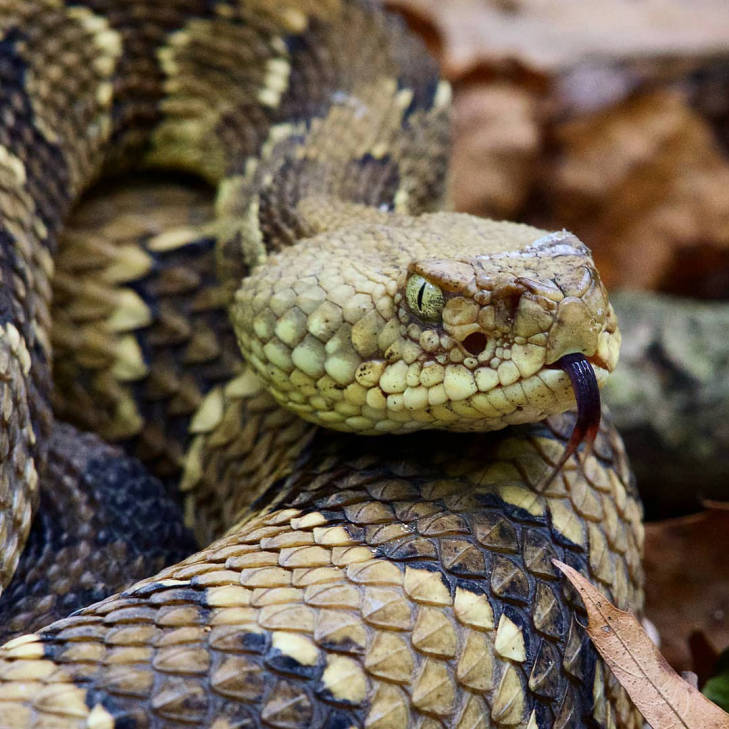
- Knowledge. We know and understand the dangers involved. Therefore, we fear because we know. For example, just about everyone knows, at least generally, how a Rattlesnake looks and sounds. And most people also know how dangerous, even deadly, they are. So, they are “deathly afraid” of Rattlesnakes, and even those who aren’t, have a “healthy respect” for them.
- Ignorance. We don’t know or understand the dangers involved, but fear the unknown. We fear what we do not comprehend or understand. Rat snakes (also called Chicken snakes- the only real difference is diet) are harmless to humans. But, they are often black in color, and if they’ve been eating well, can get to be quite large. They’re also not afraid of enclosed spaces and are therefore willing to venture into barns, and even houses. So, people find a big black snake in their shed, on their porch, or even in their house, and freak out and want to burn the house down because they don’t know what kind of snake it is, or understand that it is much more beneficial than dangerous to humans.
- Emotion. Although we have some degree of knowledge, and therefore understand that the fear is irrational, we allow our emotions to override our knowledge/understanding and are fearful nonetheless. Take Gecko lizards for example. They have no venom, usually only grow to be a few inches long, are completely harmless to humans, eat mostly gnats and mosquitos, and can be easily squashed without any adverse consequence by even the smallest of people. And yet, despite knowing, understanding, and even acknowledging these things, some people allow their emotions to override their understanding and are terrified of them. The fear is completely irrational and emotionally based, but is present nonetheless.
The first two are based in knowledge, or the lack thereof, but the latter one is obviously purely emotionally based, and is, therefore, irrational. But this article isn’t really about snakes and lizards. What are the spiritual applications of these things? The fears mentioned correspond to these…
We fear God because we know and understand at least something of His power and nature. And we ought to fear God since He has the power not only over life and death, but eternity. Jesus warned His disciples, “And do not fear those who will the body, but are unable to kill the soul; but rather fear Him who is able to destroy both soul and body in hell,” Matthew 10:28. But for those who are willing to become God’s children through obedience, “you have not received a spirit of slavery leading to fear again, but you have received a spirit of adoption as son by which we cry out, ‘Abba! Father!’” Romans 8:15. What does this mean? When we fear God (with the healthy respect kind of fear) enough to obey Him, we no longer have to fear judgment (to be afraid of or terrorized by kind of fear), condemnation, and punishment, 1John 4:18, “There is no fear in love; but perfect love casts out fear, because fear involves punishment, and the one who fears is not perfected in love.”
We fear death because, in ignorance, we think it is the end of everything for us, or because we don’t know what’s on the other side of it. While death will not be the final end for anyone (cf. John 5:28-29), we don’t have to fear it. Those who fear and obey God, are delivered from the fear of death, Hebrews 2:15. Therefore, instead of fearing eternal punishment, they have confident knowledge that eternal reward awaits them on the other side of death, cf. Matthew 25:34. For the God-fearing, death is but the portal to eternal life. Fear God in knowledge instead of death in ignorance!
We fear Satan because, despite knowing God’s power over him, and understanding that if we resist him, he will flee from us, we allow our emotions to override our faith. I realize that Satan is compared to a roaring lion in the Scriptures instead of Gecko, cf. 1Peter 5:8. But consider this: Why does a lion roar? One of two reasons: 1) to scare potential prey that he has not yet spotted into running in order to find and catch them; or, 2) to frighten potential prey that he has spotted so badly that they become paralyzed. In either case, he roars to frighten. However, we know that if we stand firm and resist him that he will flee from us, James 4:8. Is your knowledge and faith strong enough to overcome your emotional and irrational fear? Will you to stand “firm in your faith” knowing that if you do the roaring lion will flee from you? We have the strength to resist, and need to realize that “the God of peace will soon crush Satan under your feet,” Romans 16:20 … dare I say, “like a Gecko”?
So: fear God in knowledge; don’t fear death in ignorance; and don’t allow your emotions to create an irrational fear of Satan! BY PHILIP C. STRONG
“GOD LOVES YOU AND I LOVE YOU AND THAT’S THE WAY IT’S GONNA BE!” – MIKE



 INCARNATE