HEART PROMPT – JAN. 8
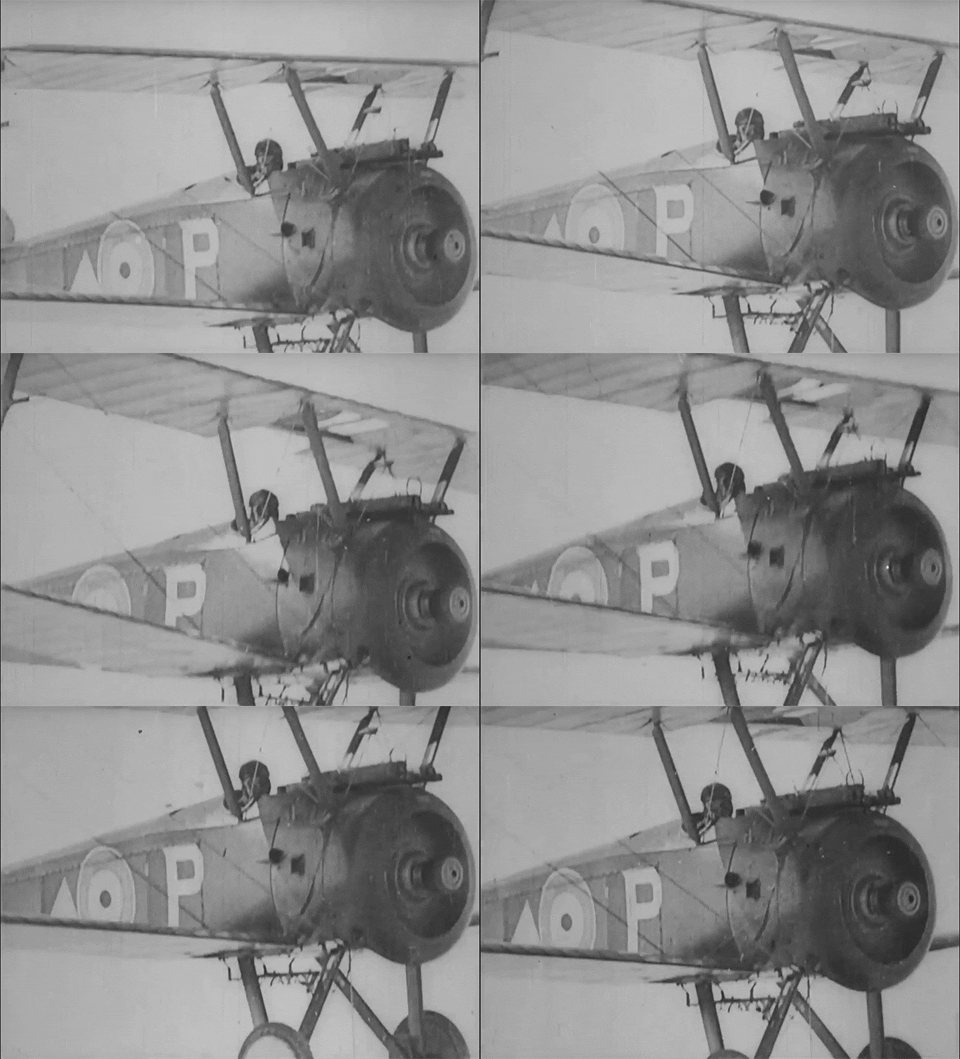
YEARS AGO, IN the pioneer days of aviation, a pilot was making a flight around the world.
After he had been gone for some two hours from his last landing field, he heard a noise in his plane, which he recognized as the gnawing of a rat.
He realized that while his plane had been on the ground a rat had gotten in.
For all he knew the rate could be gnawing through a vital cable or control of the plane.
It was a very serious situation.
He was both concerned and anxiouis.
At first he did not know what to do.
It was two hours back to the landing field from which he had taken off and more than two hours to the next field ahead.
Then he remembered that the rat is a rodent.
It is not make for the heights.
It is made to live on and under the ground.
Therefore the pilot began to climb.
He went up a thousand feet, then another thousand and another until he was more than twenty thousand feet up.
The gnawing ceased.
The rat was dead.
He could not survive in the atmosphere of those heights.
More than two hours later the pilot brought the plane safely to the next landing field and found the dead rat.
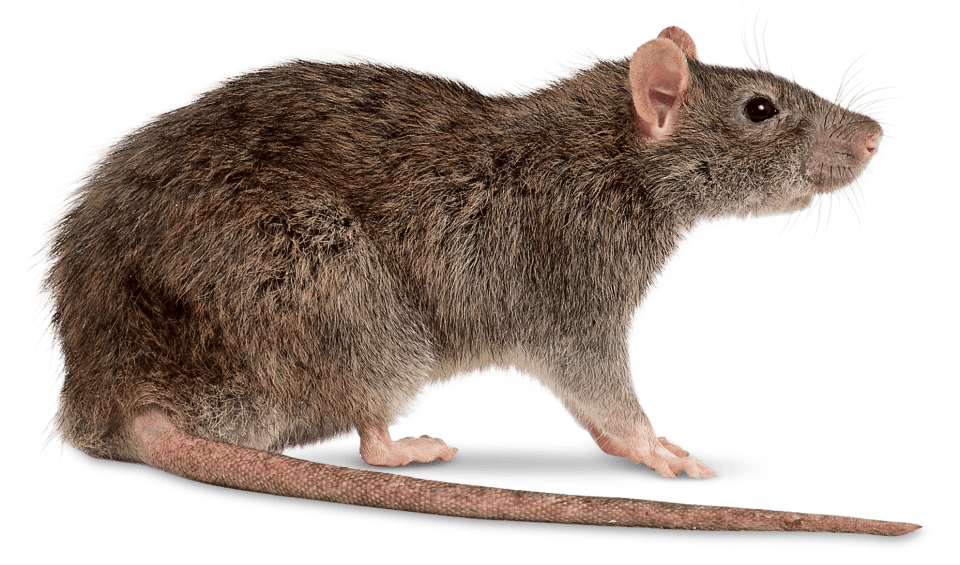
WORRY IS A RAT.
It cannot live in the secret place of the Most High.
It cannot breathe in the atmosphere made vital by prayer and familiarity with Scripture.
Worry dies when we ascend to the Lord through prayer and His Word. Author unknown
“Do not be anxious about anything, but in everything by prayer and supplication with thanksgiving let your requests be made known to God.” Philippians 4:6 ESV
ZECHARIAH IS OFTEN labeled a “minor prophet,” but his prophecies are of major importance, for he is alluded to or quoted over eighty times in the New Testament.
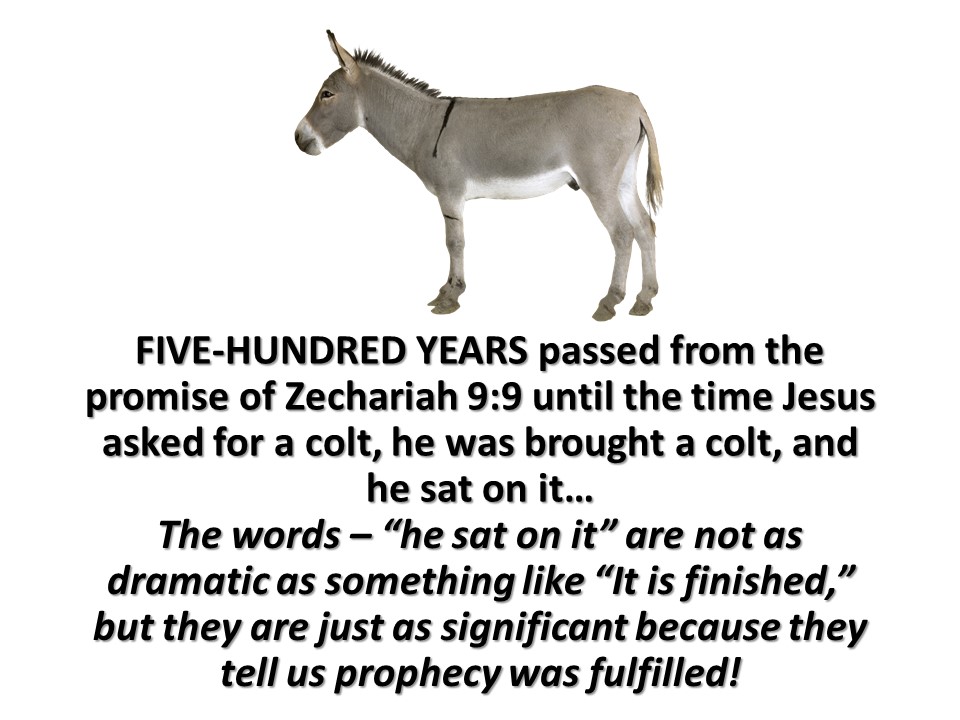
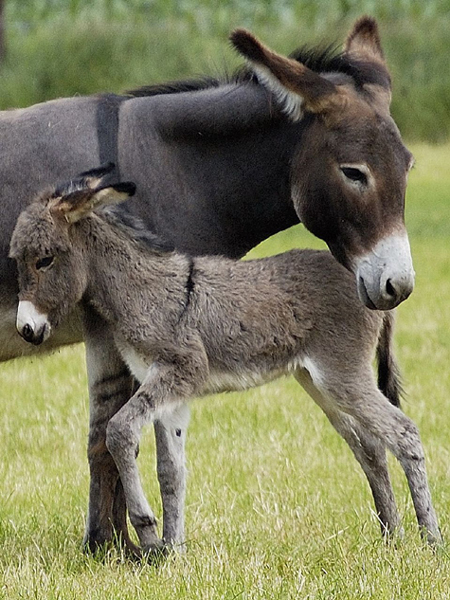
[In] his most famous prophecy (Zechariah 9:9) he exhorts God’s people, whom he calls the “daughter of Zion,” to celebrate their future – to rejoice in the promise of the coming King and in the establishment of his kingdom: “Rejoice greatly, O daughter of Zion! Shout aloud, O daughter of Jerusalem! Behold, your king is coming to you; righteous and having salvation is he…”
[In] contrast to the many wicked kings who have preceded him, we would only expect that God’s divinely appointed king would conform to the morality of God’s Law and bring with him redemption for God’s people… Yet, when the prophet goes on to depict this great king as being “humble and mounted on a donkey,” we are tempted to think something is wrong. Humble? Donkey? Is this a mistake? Is this a misprint? It should be “glorious.” It should be “warhorse.” But this is no mistake. This is no misprint. The prophet intentionally wrote of this king being humble.
In the context of the book of Zechariah, as well as the rest of the prophets, this word “humble” does not mean so much “gentle” as it means “lowly” or “bowed down” or even “full of suffering.” The word “humble” denotes, as C. F. Keil claims, “the whole of the lowly, miserable, suffering condition, as it is elaborately depicted in Isaiah 53.” So, in contrast with the arrogance and violence usually associated with earthly kings, this king, we are told, will be poor and afflicted; he will be a sovereign Lord and yet a suffering servant.
[To] prophesy that a king would come in this specific manner must have sounded bizarre to Zechariah’s original audience (perhaps as bizarre as it sounds to us), for since the time of King Solomon, when the breeding of horses was introduced, we are given no example in the Old Testament of any royal figure riding upon such a beast. in fact in all of antiquity we would be hard-pressed to find an example of any sort of ruler mounting a colt…
It’s laughable to think about a Roman emperor straddled over such a slow, dirty, undignified, and unpretentious beast. It would be like the President coming into Chicago and traveling down the Magnificent Mile on a tricycle. When a king comes to town, the expectation is that he will ride proudly upon a battle steed at the head of a parade of decorated troops, as Alexander the Great did when he rode into Jerusalem in 332 BC.
And yet the prophet Zechariah envisions a king (Jesus! – mb) who will ride into Jerusalem “mounted on…the foal of a donkey.” Douglas Sean O’Donnell, Matthew – All Authority in Heaven and on Earth, “The Son of God on a Child of a Donkey,” 501
“GOD LOVES YOU AND I LOVE YOU AND THAT’S THE WAY IT’S GONNA BE!” – MIKE
 INCARNATE