INCARNATE: THE DEATH OF ROMANS 6

Here’s an interesting question.  It is commonly stated that the gospel, or good news, of Jesus Christ is the good news of his death, burial, and resurrection (1 Cor. 15:1-4).  We also know that eternal condemnation awaits those who “do not obey the gospel of our Lord Jesus” (2 Thess. 1:7-9).  With these two facts in mind, how in the world does one “obey” a death, burial, and resurrection (since that is what the gospel is commonly referred to)?

What must first be pointed out is that the Bible never says that the gospel message consists of solely the good news of Jesus’ death, burial, and resurrection.  In actuality, the inspired apostle called Jesus’ death, burial, and resurrection “of first importance” when it came to the gospel message (1 Cor. 15:1-4), thus implying that there were other parts of the gospel message which, while not as important, nevertheless were included as parts of the whole.

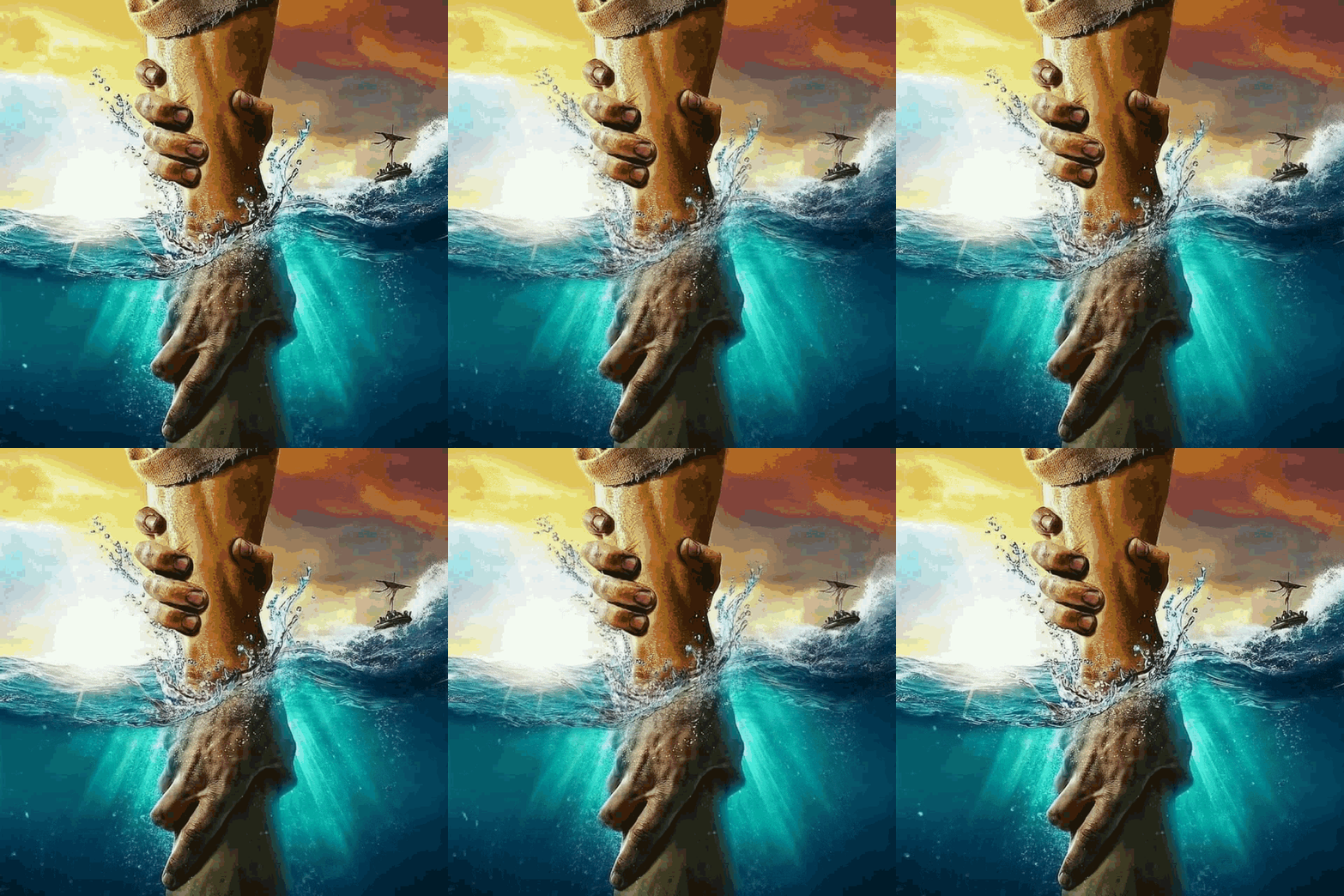
Putting that aside, however, notice that today’s scripture basically tells us how we “obey” Christ’s death, burial, and resurrection.  God does not expect us to physically die, be buried, and be resurrected in order to be saved…but he does expect us to do so spiritually.  This is one of many reasons why baptism, literally immersion, must not be overlooked as part of God’s plan of salvation.

The apostle tells us that we are baptized into the death of Christ, that it is through baptism that we are buried with Christ into his death, and that it is through baptism that we are resurrected just as he was to walk in a new life as a Christian.  It’s important we understand this, especially in light of how so many downgrade the importance of baptism when it comes to our salvation and our obedience to the gospel.  Jesus himself required baptism along with faith for salvation (Mark 16:16), Peter preached that baptism after repentance would produce forgiveness of sins (Acts 2:38), and later he would write that baptism “…now saves you” (1 Pet. 3:21).  Today’s scripture passage gives us many reasons why Jesus and Peter said these things.

Do not believe people who tell you that baptism is not necessary for salvation or forgiveness of sins.  God’s Word says otherwise (Rom. 6:17-18; 3-4). Jon Mitchell

“GOD LOVES YOU AND I LOVE YOU AND THAT’S THE WAY IT’S GONNA BE!” – MIKE
INCARNATE: WHAT JESUS DID NOT SAY TO PETER

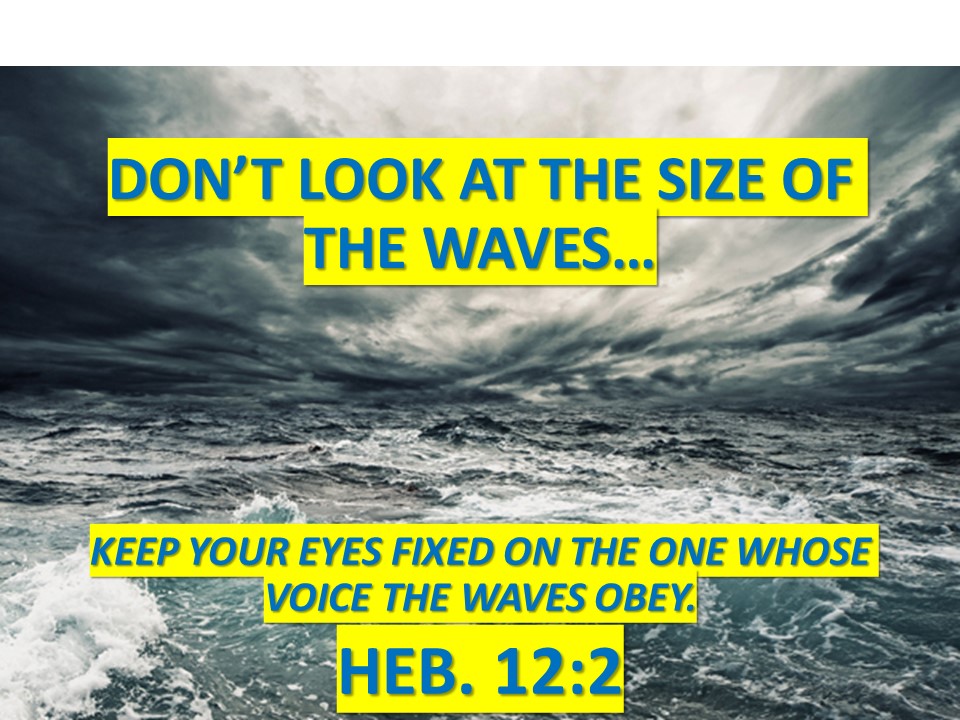
Lately, I have been thinking a lot about the time Peter walked on water and our Lord’s remarks to him when he sank. I can’t help but feel it’s incredibly related to our lives now and I want to take a look at what Jesus actually said and what He did not say. 

First, He did not rebuke Peter for looking at the storm. We know Jesus has the power to calm storms with a word (Matthew 8:23-27). We also know He is God (John 8:24) and knows all things; so clearly, He would have expected Peter to look at the storm. Why then did He not calm the storm for Peter? The obvious answer is that this was a test of faith, however I believe there is more to it. Hang onto that thought, we’ll get back to it later. 

Jesus did not rebuke Peter for being afraid. We often quote Jesus’ words, “You of little faith,” and sometimes think Peter should have been fearless in that storm, but you can have strong faith while being afraid. To show the separation of faith and fear, we need only look at Jesus in the garden before His death. Luke’s account says He was in so much agony His, “sweat became like drops of blood” (Luke 22:44). Matthew and Mark tell us that He went to pray the same prayer three times to ask the Father not to let Him suffer. Here’s where the faith comes in: Jesus finishes His prayer each time with, “Yet not My will, but Yours be done.” In other words – “I’m terrified and don’t want to do this, but if this is what You want, I will do it.” This is what Jesus expected of Peter – to look at the storm and be afraid, yet continue walking toward Him in faith. 

One last thing I want to point out that Jesus did not say to Peter. He did not say, “You of no faith.” Clearly Peter had some kind of faith or he wouldn’t have gotten out of the boat in the first place. And when he began to sink, his first thought wasn’t to try and swim back to the boat or to find something to grab on to, but to cry out to Jesus for help. Jesus rebuked Peter for having “little” faith because it was enough to get him out of the boat and enough to remind him Who to call for help, but not enough to get him where he was going in the first place. 

Now, let’s make an application. There is a storm going on around us right now: a pandemic, rioters, messy politics, and many other things. Fear is a natural part of seeing these things happen, but do we have “little faith” like Peter? I have made several prayers to see a peaceful end to all of it, yet it persists. I’m confident many others have too. Why then does God not calm the storm for us? Because He wants us to look at it and be afraid – yet walk toward Him in faith. Keep in mind what Paul says in Philippians 4:11-13, “Not that I speak from want, for I have learned to be content in whatever circumstances I am. I know how to get along with humble means and I also know how to live in prosperity; in any and every circumstance I have learned the secret of being filled and going hungry, both of having abundance and suffering need. I can do all things through Him who strengthens me.” 

These lessons have hit personally and made me realize some of my own flaws. I have been afraid, angry, and confused. None of those emotions are wrong necessarily, but I let them distract me just as Peter let his fear distract him. The only way to get past all our troubles in this “present distress” is faith. We are all going be afraid, angry, and confused; but we must not have “little faith” during this time. Rather we should be “rich in faith” (James 2:5) and continue to walk toward Jesus while watching the storm rage around us. Cody Smith

“GOD LOVES YOU AND I LOVE YOU AND THAT’S THE WAY IT’S GONNA BE!” – MIKE