Author: imikemedia
Christian. Husband. Father. Grandfather. Evangelist. Son.
TODAY’S PRAISE – DEC. 18
HEART PROMPT – DEC. 18
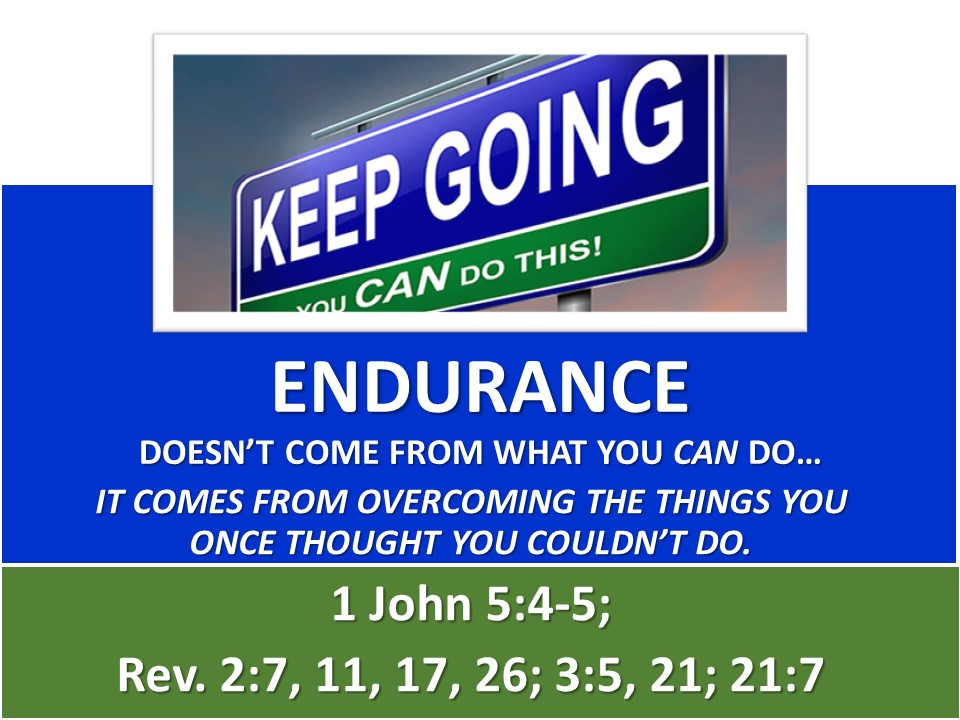
INCARNATE: RUN WITH ENDURANCE
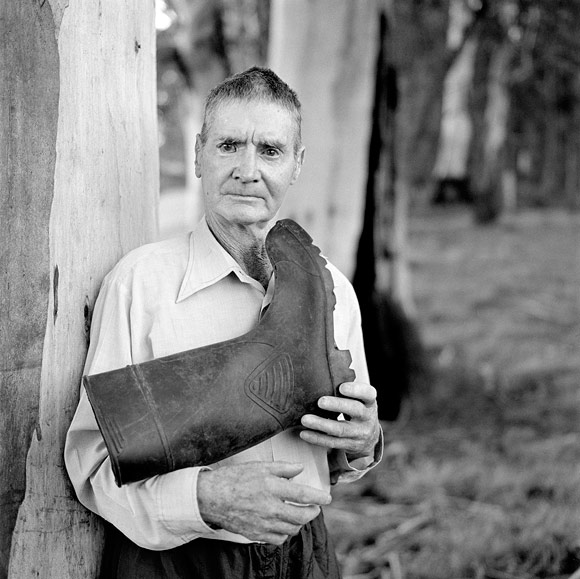
IT’S A GRUELING 543.7 mile endurance race from Sydney to Melbourne, Australia–the world’s longest and toughest ultra-marathon.
In 1983, 150 world-class runners converged on Sydney for the event.
On the day of the race, a toothless 61-year-old potato farmer and sheepherder named Cliff Young approached the registration table wearing overalls and galoshes over his work boots.
At first, people thought he was there to watch the race, but to their surprise, Cliff Young declared his intention to run and requested a number.
He had grown up on a farm without the benefit of luxuries like horses and four-wheel drives.
When storms rolled in, Cliff headed out to round up his 2000 sheep over his 2000 acre farm.
Sometimes he had to run them two or three days non-stop to complete the round up.
The incredulous staff issued Cliff #64.
As he mingled with the other runners near the starting line, spectators couldn’t believe their eyes.
“This has to be a joke!” some mused.
When the gun went off, bystanders snickered at Cliff – who was immediately left behind in his galoshes and overalls by the other runners with their sculpted bodies and running gear.
All of Australia was riveted to the live telecast as they watched the scene unfold.
“Someone should stop that crazy old man before he kills himself!”
Five days, 15 hours, and 4 minutes later, Cliff Young came shuffling across the finish line in Melbourne, WINNING the ultra-marathon.
He didn’t win by a few seconds, or even a few minutes.
The nearest runner was 9 hours and 56 minutes behind.
Australians were stunned at this remarkable yet seemingly impossible victory.
How did it happen?
Everyone knew that the only way to win the ultra-marathon was to run for 18 hours, then stop and sleep for six hours.
The routine was repeated for five punishing days.
But no one told Cliff Young.
He just shuffled along, day and night, night and day, without ever stopping to sleep.
He broke the previous race record by nine hours and became a national hero.
Interestingly, professional runners began to study and experiment with the odd shuffle that Cliff used in his running.
Many long-distance runners have since adopted what has come to be called the “Young shuffle” due to its aerodynamic and energy efficiency.
Victory in the Christian life comes through endurance.
It’s not a 100-yard-dash; it is a life-long marathon.
In the short distance race, speed is important.
In the long distance race, endurance is what leads to success. Dr. David Allen
“Therefore, since we are surrounded by so great a cloud of witnesses, let us also lay aside every weight, and sin which clings so closely, and let us run with endurance the race that is set before us, 2 looking to Jesus, the founder and perfecter of our faith, who for the joy that was set before him endured the cross, despising the shame, and is seated at the right hand of the throne of God” (Heb. 12:1-2 ESV).
INCARNATE – BIBLE STUDY: BECOMING A SERIOUS BIBLE STUDENT

It is remarkable how little time and effort many are putting into the study of the Bible. Far too many preachers, teachers and church leaders think that if they read a book or commentary such makes them Bible scholars. They are wrong. Preachers from the past spent many hours each day in study. Our brother, Gus Nichols, devoted five hours every day for more than fifty years inside the Bible. I remember, as a young preacher, hearing him say that there were 10,000 sermons he had which he would never be able to preach. He was truly a student of the Bible and his life reflected this.
Franklin Camp probably had the greatest impact on me of any preacher I have ever known. I was a student at Lipscomb in 1961 when I heard him say, “If brother Nichols needed to study the Bible five hours each day, then I need to spend more than that.” So every day he went to the his study at 4:00 A.M. to begin his time of study—six hours every day! Those of us who were able to be around him know the depth of study he presented in every one of his classes or sermons.
These men may be exceptional in the time they devoted to study, but the decision remains for each of us to make as to how much time we devote to study. I am not just speaking of preachers, but of every member of the church. How much time do you devote to reading and meditating on His revelation? Have you ever read the complete Bible? How many of the fifteen judges can you name? Can you name fourteen apostles? What well know character in the Bible is Nathan associated with? What about Shem? Achan? Uriah? Abimelech? Balak? Caleb? Sheba? Naboth? Gehazi? Sennacherib? Jochebed? Orpah? Dorcas? Eutychus? Matthias? Og? Antipas?
What about Bible places? What event happened at Gethsemane? Carmel? Horeb? Troas? Kadesh-Barnea? Jericho? Moriah? Cana? Ono? Lystra? Damascus?
What about the location of important verses? Can you show someone the plan of salvation? What verses show the difference between the two covenants? Can you use your Bible to discuss the day we must partake of the Lord’s supper? What verses reveal God’s attitude toward abortion? Toward homosexuality? The works of the flesh? What verses show the permanence of marriage and the sinfulness of divorce?
Brethren, let’s study the Bible. Some of the people and places above may have little importance, but they serve as a challenge to each of us to study more. Be truthful—when was the last time you spent five hours in a week in study! by Dan Jenkins
 INCARNATE