Author: imikemedia
Christian. Husband. Father. Grandfather. Evangelist. Son.
INCARNATE: REPENT AND CONFESS – DEC. 15

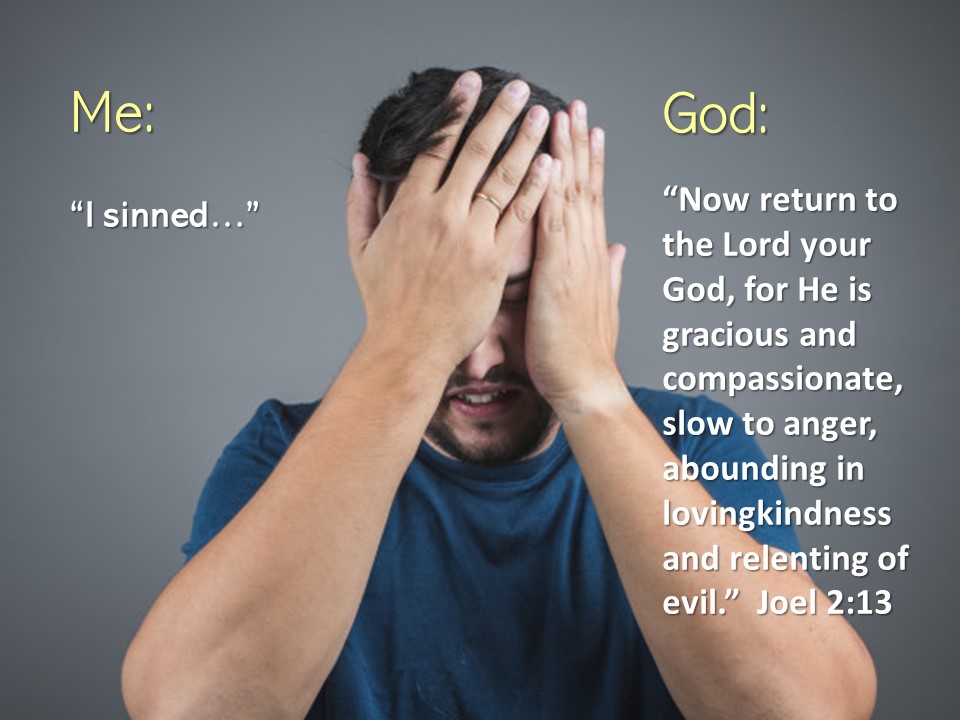
Repentance and confession are fundamental to the Christian’s relationship to God. These are not merely one time “steps” in a 5-point plan of salvation, but are necessary components in an ongoing fellowship in which God, in His grace and mercy, grants forgiveness and hope. They are responses to the recognition of at least two vital facts: 1) the problem of sin as it relates to God’s nature, and 2) the Lordship of Jesus over our lives. There is a connection between the two.
Repentance
To repent is to turn away from something wrong and to turn toward what is right. It is corrective action, done with intent to serve God. Inherent in the concept of repentance is a recognition of sin in one’s life. If we never see that we are sinners, then we will never see the need to repent. This was a basic problem with the Pharisees, as Jesus pointed out (Matt 9:10-13). Because the Pharisees didn’t know they were sick, they didn’t realize how much they needed a physician. Repentance starts with an awareness of sin and the great need we have to turn away from that sin. From here, we see:
a. Repentance is an intentional decision of the mind. Until we decide to change in obedience to the command (Acts 2:38; 3:19; 17:30-31), we will continue to do wrong. Repentance is not that we just happen to change a behavior for a reason unrelated to God, but rather that we know we have been an offense to God and need to turn back to Him.
b. Repentance comes from the heart. One can change for the wrong reasons, in which case true repentance has not occurred. Sorrow is tied to repentance, but there are different types of sorrow. “Godly sorrow” is what God looks for (see 2 Cor 7:8-11). The heart, as well as the mind, is affected.
c. Repentance is seen in the change of action, even though it begins in the heart. John’s message was, “bear fruit in keeping with repentance” (Matt 3:8). Paul preached that the Gentiles should “repent and turn to God, performing deeds appropriate to repentance” (Acts 26:20). Saul and David make a good case study. Both engaged in terrible sins (Saul’s sins were no worse than David’s). Both recognized they sinned and confessed that they were guilty. But the real difference came in how they acted afterward. Saul continued in his sins, and even become increasingly twisted and hardened in his heart. David repented and showed by his continual devotion to God that he meant it (cf. Psalm 51). Perhaps this is why he was a man after God’s heart (Acts 13:22). God doesn’t want us merely to say we are guilty. He wants us to show Him that we will love and serve Him with the whole heart. Because of this, we see that repentance is not a one time act for salvation, but continual course correction through a life of service to God.
Confession
Confession is outward admission of guilt. At its heart, confession means to agree with something. The question is, what exactly are we agreeing with?
1. We confess our guilt of sin. “If we confess our sins, He is faithful and righteous to forgive us our sins and to cleanse us from all unrighteousness” (1 John 1:9). This is where confession is first tied to repentance. If we are repenting, then we are recognizing that we are guilty of sin and we must repent. Concurrent with that is our confession of that guilt, which, in turn, implies that we are wanting to turn away from the sin. That is, there is an inherent concept of confession of sin built into the repentance. This, as Christians ought to know, becomes part of our ongoing relationship with God, and it’s even a part of our fellowship with one another as we confess and pray together (Jas 5:16).
2. Just as fundamental is our confession of the Lordship of Jesus. Once again, this is not a mere step to be done once in order to be saved, but actually becomes a way of life. To be sure, we confess with the mouth that Jesus is Lord, which is also based in the heart (Rom 10:9-10). This confession is an extension of the fact that we have sanctified Christ as Lord in our hearts and are ready to defend our hope (1 Pet 3:15). Confessing Jesus before men (Matt 10:32-33) is a lifetime process and is carried out in the way we live. Herein is the real tie to repentance. Bearing fruit appropriate to repentance means living a life of confession to the world that Jesus is our Lord, and no other has such a claim to our hearts and lives.
“Repent” and “Confess” are both far more involved in the life of a Christian than a simple one-time act of obedience. Both are intertwined in a way of living before both God and men. Without them, we will surely be lost. With them, we will maintain a strong fellowship with God and fellow Christians. Don Moyer
“GOD LOVES YOU AND I LOVE YOU AND THAT’S THE WAY IT’S GONNA BE!” – MIKE
HEART PROMPT – DEC. 15
INCARNATE – WHAT IS ATHEISM?

“Atheism” comes from a combination of two Greek words, or rather, one letter and another word. The Greek letter “A” (pronounced alpha) means negative. Combine that with “theos” (theism) for god, a-theism means literally “negative god” or “anti-god” or “there is no god.”
It is important to understand that the atheist is not saying, “I don’t think there is a god” or even “I don’t believe there is a god.” The Atheist is affirming the non-existence of God. He is affirming, what philosophy calls, an “absolute negative.” Anyone who took an introductory course in philosophy will tell you this is an untenable philosophical position. Atheism is a logical contradiction.
Think about it. How can anyone affirm a negative in the absolute? It would be like me saying, “There is not a white stone with black spots anywhere in the galaxies of this universe.” That is affirming an absolute negative. The only way I can affirm that negative is if I had absolute, unlimited knowledge of the entire universe. Yet when a person says “there is no God,” that is exactly what he is claiming.
But atheism is nothing new. David pointed out 3,000 years ago that “the fool has said in his heart, “There is no God.”” (Psa. 14:1) Indeed, it is the height of arrogance and folly to claim to know with certainty that there is no God. Many people, recognizing that theism is a self-defeating philosophy, backpedal and ascribe to something called “agnosticism.”
“Agnosticism” comes from the Greek letter “A” (negative) and “gnostos,” which means knowledge. Agnosticism means “negative knowledge” or “anti-knowledge” or “there is no knowledge.” Agnosticism is really easy to defend. All you have to prove is that you don’t know!
But let’s qualify that statement: it is equally foolish to say, “I know that I can’t know” than it is to say “I know everything.” Is this not also self-defeating? If you don’t know, how can you know you don’t know?!
One way to address both beliefs is with a question: what if the atheist or agnostic is wrong? What if a person has lived with the conviction that there is no God or that they couldn’t know if He exists and he comes to death only to find out he was wrong?
Blaise Pascal responded in this way: “Should a man be in error in supposing the Christian religion to be true, he could not be a loser by mistake. But how irreparable is his loss and how inexpressible is his danger who should err in supposing it to be false.”
Pascal isn’t saying he believes there is a chance he could be wrong about God and the Bible. He is simply making the point, from a philosophical perspective, how bad of a deal atheism is. If the atheist is wrong about God, how terrible are the consequences of his disbelief? He would meet God in the judgment with no excuse (Rom. 1:20).
But, hypothetically, if Christianity turns out to be a scam and there is no judgment or reward (which, again, Pascal is not affirming), what exactly has he lost living as a Christian? He has found life to be worth the living. He found the kind of joy, purpose and satisfaction that all philosophy strives to attain. Thankfully, there is a God, He is alive; in Him we live and we survive! Danville church of Christ
“GOD LOVES YOU AND I LOVE YOU AND THAT’S THE WAY IT’S GONNA BE!” – MIKE
 INCARNATE