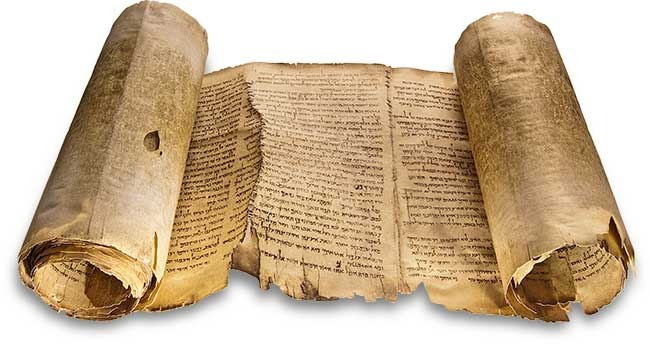
Sometimes, we who are members of the church of Christ are accused of not believing in the Old Testament. The accusation is made because we teach that one must follow the teachings of the New Testament. To teach that one must follow the New Testament does not mean that we do not believe in the Old Testament. The allegation that members of the church of Christ do not believe in the Old Testament is false.
The Bible itself refers to the Old and New Testaments, or covenants – “Then said he (Christ, h.h), Lo I come to do thy will, 0 God. He taketh away the first (covenant, or testament, h.h) that he may establish the second (covenant, or testament, h.h ).” The Old Testament is old because a second testament was given. The New Testament is new because it is the second or more recent testament given to us and because it came after the first testament.
The purpose of the Old Testament (sometimes referred to as “the law and the prophets” because it contains the Law of Moses and the words of various Old Testament prophets) was to “bring us to Christ, that we might be justified by faith” (Galatians 3:24). When Christ died on the cross, the Old Testament fulfilled its purpose, and the New Testament was enacted as the will of God. Therefore, the New Testament sets forth God’s conditions for salvation, regulates our worship, and regulates our conduct.
God poignantly signaled an end of the Old Testament and the beginning of a New Testament at the transfiguration of Christ. When Peter suggested building three tabernacles, one for Moses, one for Elijah, and one for Christ, God spoke from heaven saying of Christ, “This is my beloved Son, in whom I am well pleased, hear ye him” (Matthew 17:5). Furthermore, Paul was referring to the Old Testament when he spoke of Christ “blotting out the handwriting of ordinances that was against us, which was contrary to us, and took it out of the way, nailing it to his cross” (Colossian 2:14). The writer of Hebrews reminds us that “God, who at various times and in various ways spoke in times past to the fathers by the prophets (The Old Testament, hh), has in these last days spoken to us by His Son (The New Testament, hh)…” (Hebrews 1:1,2, NKJ).
Though the Old law has been fulfilled (Matthew 5:17), a study of the Old Testament is still useful. It is written “for our learning” and “for our admonition” (Romans 15:4; 1 Corinthians 10:6,11). For instance, when Paul urged strong Christians to bear the infirmities of the weaker ones, he did so by appealing to the example of Christ, showing that in the Old testament it is written of Christ, “The reproaches of them that reproached thee fell on me” (Romans 15:1-4; Psalms 69:9). Furthermore, Paul encouraged the Corinthians “to take heed lest they fall” by reminding them that Israel, though once chosen by God, became displeasing to God when they murmured and when they committed fornication and idolatry (1 Corinthians 10:1-12). Many other truths can be learned and illustrated through careful study of the Old Testament.
Members of the church of Christ believe In the Old Testament. The Old Testament contains the first thirty-nine books of the Bible. We do not deny the existence nor the authenticity of the Old Testament. We believe that it was inspired by God (2 Timothy 3:16; 2 Peter 1:20,21) and that it is a part of God’s revelation to man. The Old Testament pointed to Christ and the New Testament (John 5:39). We study the Old Testament and learn from it, but it is the words of Christ and the New Testament that will judge us in the last day (John 12:48). HAROLD HANCOCK
“GOD LOVES YOU AND I LOVE YOU AND THAT’S THE WAY IT’S GONNA BE!” — Mike

 INCARNATE