Category: Uncategorized
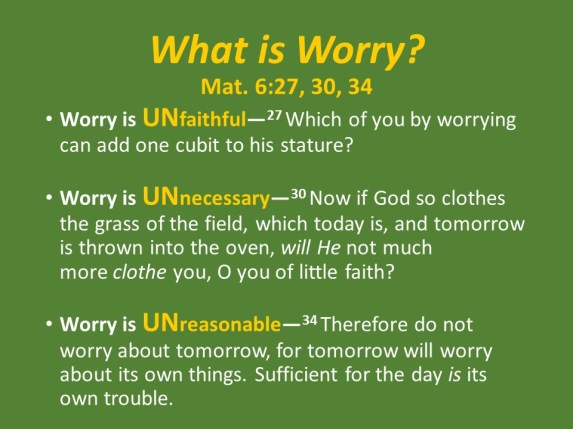
What’s Wrong with Worry?
Worry is not a trivial sin…
INCARNATE 03.23.20
Is it Easy to Build a Bridge?
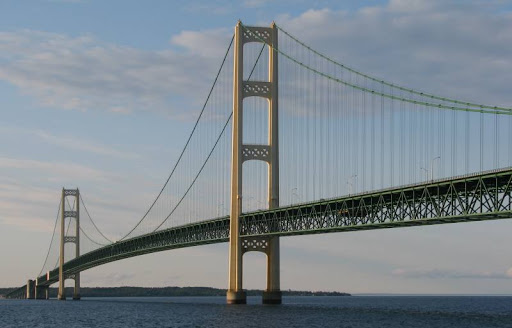
PEOPLE USED TO travel between the UP (Upper Peninsula) and LP (Lower Peninsula) of Michigan by ferry until they built a bridge along the Straits of Mackinac…
In 1934, the Michigan Legislature created the Mackinac Straits Bridge Authority to study the feasibility of the bridge and authorized it to sell bonds for the project. Preliminary plans for the bridge featured a three-lane roadway, a railroad crossing on the under deck of the span, and a center-anchorage double-suspension bridge configuration similar to the design of the San Francisco-Oakland Bay Bridge. From 1939 to 1941, a cause-way of approximately 4,000 feet in length was constructed with concrete road fragments extending from the northern shore. With uncertainty in funding and the initiation of World War II, further building was delayed. In 1950, engineers resumed construction and the state legislature authorized the sale of $85 million in construction bonds on April 30, 1952.
David B. Steinman was appointed the design engineer in January 1953, and the American Bridge Division of United States Steel Corporation was awarded a contract of over $44 million to build the steel superstructure. On November 1, 1957, after two-and-a-half years of construction and the loss of five lives, the bridge finally opened to traffic. It was officially dedicated on June 25, 1958. The bridge is approximately five miles long, the third longest in the United States. Forty years after the dedication, the 100-millionth crossing was celebrated.
Most of us probably look at the construction of this bridge as a feat of modern engineering. True enough, it is. But behind the construction was the need: the need to connect two cultures and two land masses, to expand and improve economic prosperity by bringing people together.
Did the bridge spring up immediately? No.
How did it start?
With a vision, a picture in the minds of visionaries of what it might resemble and how it might change the lives of all affected by its construction. When it became clear that ferries were too expensive and too inefficient to accomplish the goals of connecting the two sides, the bridge came to the forefront of everyone’s mind. The old ways of transportation just were not working. Something new had to be put into place.
What it cheap? No.
Was it easy to build? No.
Were human lives put in danger? Yes.
Was it worth the cost, the hardship, the lives lost, the requirements of years of work and commitment to make this bridge happen?
For most people connected with the bridge, the answer was an overwhelming yes.
THOUGHT: Like suspension bridges built across bodies of water, it takes time, money and risk for bridges of healing to be built between estranged people. Many may feel that the cost is too high to achieve the bridge. It might cost me time or pride. I might have to say I’m sorry. What if the person to whom I am trying to direct my bridge laughs at me, scorns me or refuses my overture – or worse yet, just plain ignores me?
Jesus said that we must count the cost of discipleship (cf. Luke 14:28). Building bridges that result in restored relationships is probably one of the most important costs of being a disciple of Jesus. Christ taught that reconciled relationships are more important to God than any offering we could bring before Him.
Why?
Because for God, how we treat others is synonymous with how we treat Him (cf. 1 John 4:20). (H. Norman Wright, Larry Renetzky)
“Therefore if you bring your gift to the altar, and there remember that your brother has something against you, leave your gift there before the altar, and go your way. First be reconciled to your brother, and then come and offer your gift.” Matthew 5:23-24
When Did Jesus Practice Social Distancing?

“They mount up to the heavens,
They go down again to the depths;
Their soul melts because of trouble.
They reel to and fro, and stagger like a drunken man,
And are at their wits’ end.” Psa. 107:26-27 NKJV
PERHAPS YOU CAN identify with the seamen described by the Psalmist. The waves caused by the coronavirus-storms of life have left you feeling emotionally tossed (cf. Jonah 1:5).
I find it intriguing that Jesus is never portrayed this way in Scripture. He is never characterized at wits end. In fact, He is calm, self-controlled and at peace. How can we account for His perpetual serenity—especially when we consider all of the stress in His life? Watch:
Jesus began His morning with social distancing. “Now in the morning, having risen a long while before daylight, He went out and departed to a solitary place; and there He prayed” (Mark 1:35; cf. Luke 4:42).
Even after the strenuous activities of the previous evening (e.g. healing, casting out demons—Mark 1:32-34), Jesus rose before the dawn and left His bed to engage in undisturbed, intimate discourse with His Father.
“Pray in the morning…”
During the day, when things were hectic, Jesus often took a break by social distancing. “So He Himself often withdrew into the wilderness and prayed” (Luke 5:16).
Even as the great crowds of people gathered to hear Jesus’ message and to be healed of their afflictions, the Great Physician slipped secretly away. You might say He closed His office, left His patients in the waiting room, and took some time alone to attend to His own welfare. Think about it. He couldn’t dispense medication indefinitely without rest and rejuvenation from above, could He?
Now consider—if JESUS needed to withdraw from the demands made on His time and energy to get into His private prayer closet (cf. Mat. 6:6), doesn’t it stand to reason that we need to do the same? When the anxieties and demands associated with this virus press our spirits and tension fills our hearts, doesn’t it just make sense that we emulate the Savior and entreat The Great I Am? “Be anxious for nothing, but in everything by prayer and supplication, with thanksgiving, let your requests be made known to God; and the peace of God, which surpasses all understanding, will guard your hearts and minds through Christ Jesus” (Phil. 4:6-7).
“Pray at the noon-time…”
Jesus ended His day by social distancing. “And when He had sent the multitudes away, He went up on a mountain by Himself to pray. And when evening had come, He was alone there” (Mat. 14:23).
Jesus had miraculously fed thousands with a boy’s lunch—five loaves and two fish (John 6:9-14). As a result, the multitude intended to force Him to becoming their king. The following day, the Lord foiled their political aspirations by urging them to accept The Bread of Life (i.e., the totality of His teaching—John 6:26-27). Sadly, after hearing His message, many of His disciples turned away from Him in confusion and disappointment (John 6:60, 66), never to return.
Why then did Jesus literally flee from the multitude’s presence to pray? Perhaps to thank His Father for strength and victory over the temptation (cf. Heb. 4:15) to accept the crowd’s bid for kingship (cf. Mat. 4), or perhaps to summon resiliency in order to endure the people’s forthcoming rejection. I cannot say for certain, but I do know that He prayed in the evening and that His recorded prayers were always concerned with something important in His ministry (cf. Luke 3:21; 5:16; 6:12; 9:18, 28; 11:1; Mat. 11:25; John 11:41; 17:1, etc.).
Following a hard day’s concerns and all of its attendant frustrations, do you conclude with a petition to your Father in heaven? If you find your soul tossed to and fro (cf. Psa. 107:27), it could be because you haven’t been on speaking terms as you should with God.
“Pray in the evening…”
“How long has it been since you talked with the Lord, and told Him your heart’s hidden secrets? How long since you prayed? How long since you stayed on your knees ‘til the light shone through? How long has it been since your mind felt at east? How long since your heart knew no burden? Can you call Him your friend? How long has it been since you knew that He cared for you.”1
“Then they cry out to the Lord in their trouble, and He brings them out of their distress. He calms the storm, so that its waves are still. Then they are glad because they are quiet; so He guides them to their desired haven” (Psa. 107:28-30). “O what peace we often forfeit, O what needless pain we bear, all because we do not carry everything to God in prayer.”2
“Pray all the time…”3 (1 Thes. 5:17).
 INCARNATE