HEART PROMPT – FEB 8

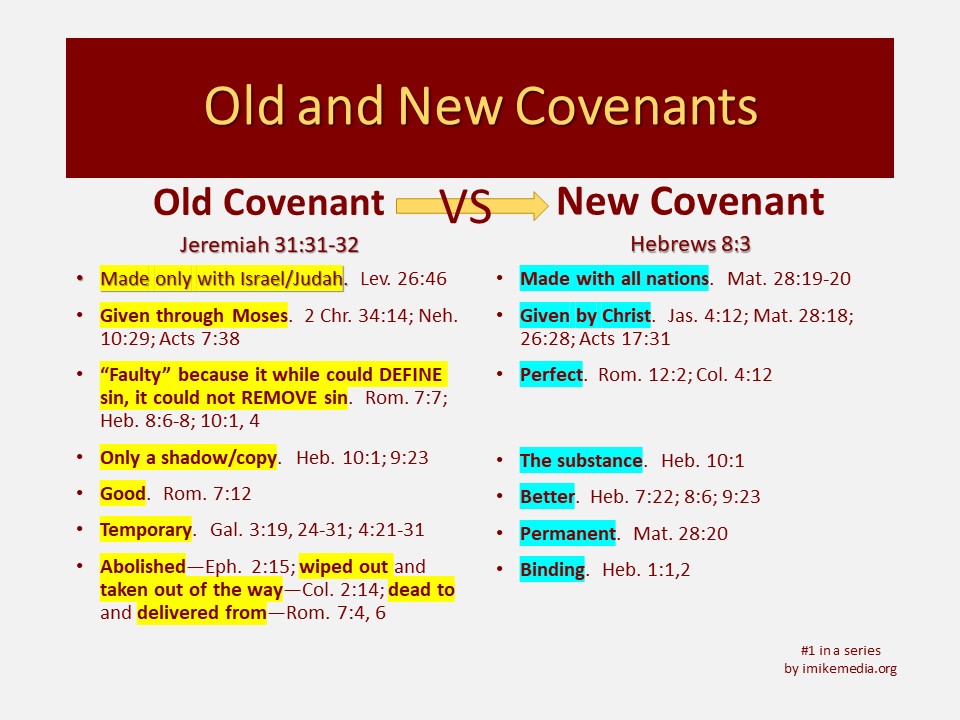
The Law of Moses was added because of transgressions till the seed should come (Gal 3:19). It was to shut up all things under sin (Gal 3:22). It was to bring us unto Christ (Gal 3:24). These purposes of the Law of Moses are suggestive of the nature of the Law. Each purpose for which Paul said the Law was given is a temporary purpose, and therefore one may make a valid conclusion that God did not give the Law to be a permanent fixture. So, how long was the law of Moses to be in effect?
There are some people who inform us that the Law of Moses is yet binding upon us, and that therefore we should keep the Sabbath Day (Saturday) instead of meeting for worship upon the First Day of the week as prescribed in the New Covenant (Acts 20:7). And there still are people who believe and teach that all one has to do to be saved is to keep the 10 Commandments. Paul told us that the Law of Moses was for a certain purpose. Then he said that the Law of Moses served its purpose, and therefore was done away. We are no longer under it.
Till the Seed Should Come
The first point we would like to make on the duration of the Law is stated in Gal. 3:19. Notice the context: “Now this I say: A covenant confirmed beforehand by God, the law, which came four hundred and thirty years after, doth not disannul, so as to make the promise of none effect. For if the inheritance is of the law, it is no more of promise: but God hath granted it to Abraham by promise. What then is the law? It was added because of transgressions, till the seed should come to whom the promise has been made: and it was ordained through angels by the hand of a mediator.” Notice especially the statement, “It was added because of transgressions till the seed should come.” It was to last “till the seed should come.”
So how long was the Law to last? Paul said it was to last “till” the seed should come. Well, how long was that? If we simply read the verse preceding the one we have just read, this will be clear: “Now to Abraham were the promises spoken, and to his seed. He saith not, And to seeds, as of many; but as of one, And to thy seed, which is Christ” (Gal. 3:16). Paul said that the seed spoken of is Christ. The Law was to last “till” Christ should come. When the seed or Christ came, the Law was to be done away. This coincides perfectly with what Paul had previously said about man’s being made dead to the Law through the body of Christ (Rom. 7:4). The duration of the Law, therefore, was until the death of Christ. At that time Moses’ Law was nailed to the cross. The nature of the Law was temporary.
Till We are Brought To The Instructor
In Gal. 3:24, 25, Paul made another statement that gives us light into how long the Law of Moses was intended to last. Verse 24, says, “So that the law is become our tutor to bring us unto Christ, that we might be justified by faith.” We saw that one purpose of the Law was to bring us to Christ. The Law was our “tutor” or “schoolmaster” to bring us to Christ. It was a purpose of the Law to see that mankind was safely delivered unto Christ, the instructor.
Now, in order that the truth stated by Paul may be all the more clear, look at the passage again: “So that the law is become our tutor to bring us unto Christ, that we might be justified by faith. But now that faith is come, we are no longer under a tutor” (Gal. 3:24,25). If there is any one passage in the New Testament that makes it unequivocally plain that the Law of Moses was temporary, this is it. In language which no man can misunderstand Paul stated the duration of the Law of Moses. This might be language which some do not believe, but it is not language which is not understood. He first said that the Law is our tutor to bring us to Christ (v. 24). Then, he declared that now that faith is come we are no longer under a tutor (v. 25). If the Law is a tutor, and Paul said we are no longer under the tutor, how can men yet declare and argue that we are bound by the Law of Moses? Paul’s argument is that we are released from the Law of Moses, and that we have perfect freedom in Christ. So here is a second statement of Paul as to the duration of the Law. First he said the Law was added because of transgressions till the seed should come (3:19), and then he said the Law is a tutor, but we are no longer under a tutor.
We will consult but one other passage in the Galatian epistle on the duration of the Law. In chapters 3, and 4, Paul demonstrated the relationship between the Law of Moses, and the Gospel of Christ. So now turn to Gal. 4:21-31: “Tell me, you that desire to be under the law, do you not hear the law? For it is written, that Abraham had two sons, one by the handmaid, and one by the free woman. Howbeit the son by the handmaid is born after the flesh; but the son by the free woman is born through promise. Which things contain an allegory: for these women are two covenants; one from mount Sinai, bearing children unto bondage, which is Hagar. Now this Hagar is mount Sinai in Arabia and answers to the Jerusalem that now is: for she is in bondage with her children. But the Jerusalem that is above is free, which is our mother. For it is written, Rejoice, thou barren that bears not: Break forth and cry, thou that travails not: For more are the children of the desolate than of her that has the husband. Now we, brethren, as Isaac was, are children of promise. But as then he that was born after the flesh persecuted him that was born after the spirit, so also it is now. Howbeit what saith the scripture? Cast out the handmaid and her son: for the son of the handmaid shall not inherit with the son of the free woman. Wherefore, brethren, we are not children of a handmaid, but of the free woman.”
In this passage Paul said that those who yet want to be under the Law do not even pay attention to what the Law says, for in the Old Testament we read of Abraham’s two wives, and his two sons. These historical realities, Paul declared, contain a vital and important lesson. The two women represent two covenants. Hagar is representative of the covenant given from Mt. Sinai in Arabia, which can be no other than the Law of Moses. This covenant answers to the Jerusalem that now is. Jerusalem was literally the center of worship under the Old Testament Law. As Hagar’s children are of the flesh and are in bondage. Sarah, Abraham’s real wife, is representative of the Jerusalem that is above, or the heavenly Jerusalem: “but you are come unto mount Zion, and unto the city of the living God, the heavenly Jerusalem, and to innumerable hosts of angels, and to the general assembly and church of the firstborn who are enrolled in heaven.” Sarah’s children are not after the flesh, but are of promise, and are not in bondage, but are free. Then Paul said, but brethren we are children of promise.
Remembering that Paul said the children of Hagar, the handmaid, represented the Law of Moses, let us see the conclusion of Paul’s teaching: “Wherefore, brethren, we are not children of a handmaid, but of the free woman” (Gal. 3:31). Hagar represented the Law, so Paul said that brethren in the Lord, members of the church, are not under the Law. This would be plain enough for any who are willing to accept the Bible as the final standard of authority.
Conclusion: How long did the Law last? It lasted until Christ nailed it to the cross. Paul said, “God having of old time spoken unto the fathers in the prophets by divers portions and in divers manner, has in these last days spoken unto us in his Son” (Heb. 1:1). We are not to go by the Law of Moses, but by the Law of Christ. Christ died to take the Old Testament out of the way, shedding his blood that we might have forgiveness of sins (1 Pet 1:18-20). The New Testament is in his blood for it is impossible that the blood of bulls and goats to take way the sins of the world (Heb. 10:4). BY ALFRED SHANNON, JR at: https://biblicalproof.wordpress.com/2016/11/08/the-duration-of-the-law-of-moses/
“GOD LOVES YOU AND I LOVE YOU AND THAT’S THE WAY IT’S GONNA BE!” – MIKE
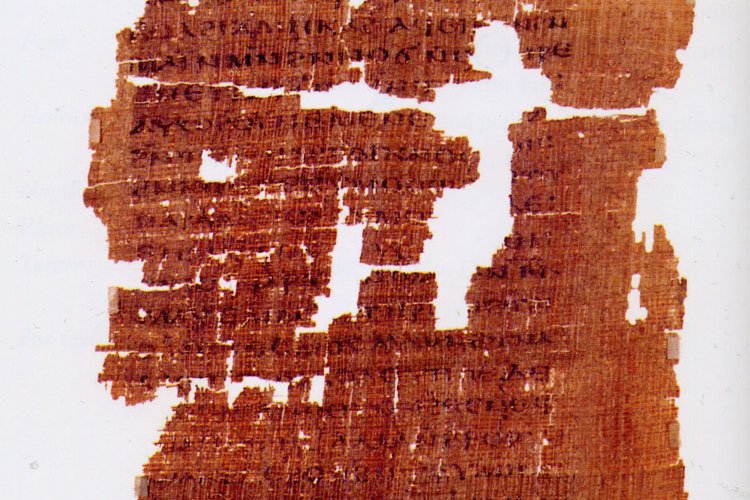
Skeptics and atheists have unleashed yet another assault on Christianity. Just days after proclaiming that maybe Jesus walked on ice instead of water, we are now asked to believe that the betrayer of Jesus was a good guy. This latest charge stems around thirteen papyrus sheets bound in a leather covering that were found in a cave in Egypt. This ancient text is being referred to as “the gospel of Judas.” And so once again we find the media more than willing to plant seeds of doubt—insinuating that the Bible is incomplete and misrepresents the man who betrayed Jesus.
God’s Word describes Judas as a thief (John 12:6)
The controversy stems around part of the manuscript in which Judas allegedly is given private instruction by Jesus, and is granted a vision into what the future holds for Jesus. One key passage has Jesus telling Judas: “you will exceed all of them. For you will sacrifice the man that clothes me.” Thus, rather than acting out of greed or malevolence, he was simply following the “plan” that he and Jesus had prearranged—a plan that could be viewed as deceptive, a label Jesus would never wear.
Undoubtedly, this front page news story will have many questioning the authenticity and accuracy of the Bible. Did Jesus really walk on ice rather than water? Was Judas really in cahoots with Jesus? Many will second guess whether the gospel accounts they have learned are indeed accurate—placing more faith in this “front page” story than the infallible Word of God. Satan must be thrilled to have the popular media on his side.
If nothing else is gleaned from this latest round of attacks on God’s Word, we Christians should rest assured the Bible is complete. God in His infinite wisdom through inspired men was able to get His Word into our hands. We can know that the Bible we are holding today is exactly what He intended for us to hold.
Yes, the Judas codex may be authentic. And yes, it may have well been written between the suspected dates of 300-400 A.D. But this no way indicates that the Bible is incomplete or alters who Judas truly was. In responding to Jesus’ question as to who the angry mob was seeking, John 18:5 states: “They answered Him, ‘Jesus of Nazareth.’ Jesus said to them, ‘I am He.’ And Judas, who betrayed Him also stood with them.” God’s Word describes Judas as a thief (John 12:6), a betrayer on multiple occasions (e.g., Matthew 26; Mark 14; Luke 22; John 18) and we are told that Satan entered him (Luke 22:3). Would this confidant hang himself after throwing down those thirty pieces of silver—if he and Jesus were really just carrying out a plan? Does this sound like someone who would become the closest confidant to Jesus?
Given the amount of fiction writing today—it is not hard to speculate that this writing may well have been “fiction” or could have been written by someone who was seeking fame through controversy. No matter what others speculate, Christians can know that this “gospel” is not a part of God’s Word. We have been given everything pertaining to life and godliness (2 Peter 1:3). BY BRAD HARRUB
“GOD LOVES YOU AND I LOVE YOU AND THAT’S THE WAY IT’S GONNA BE!” – MIKE
 INCARNATE
