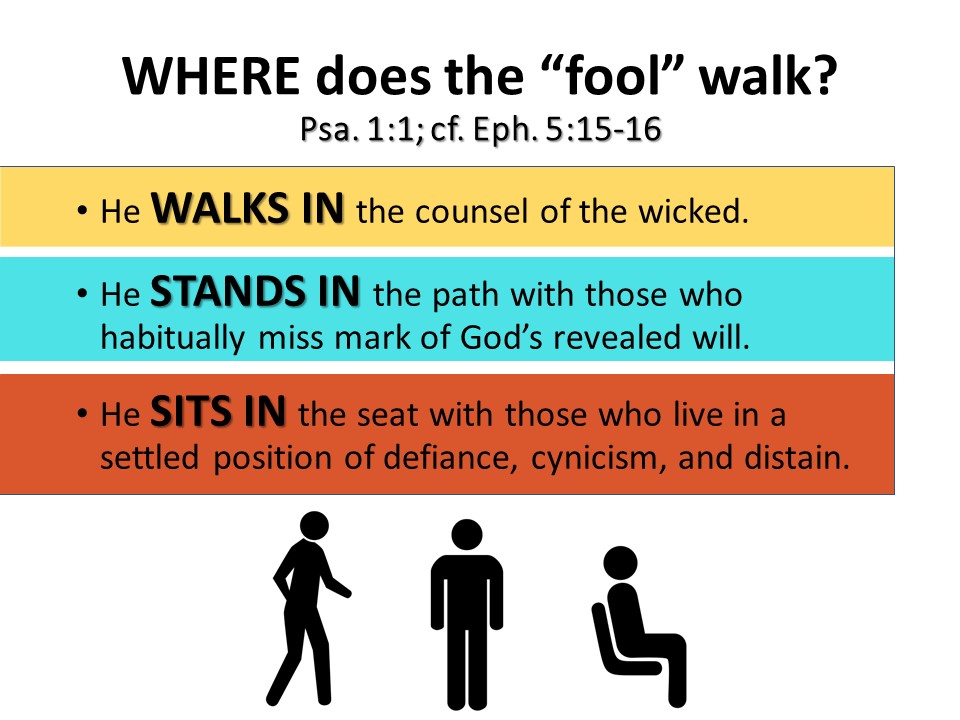
“Pay careful attention, then, to how you walk…” Eph. 5:15a
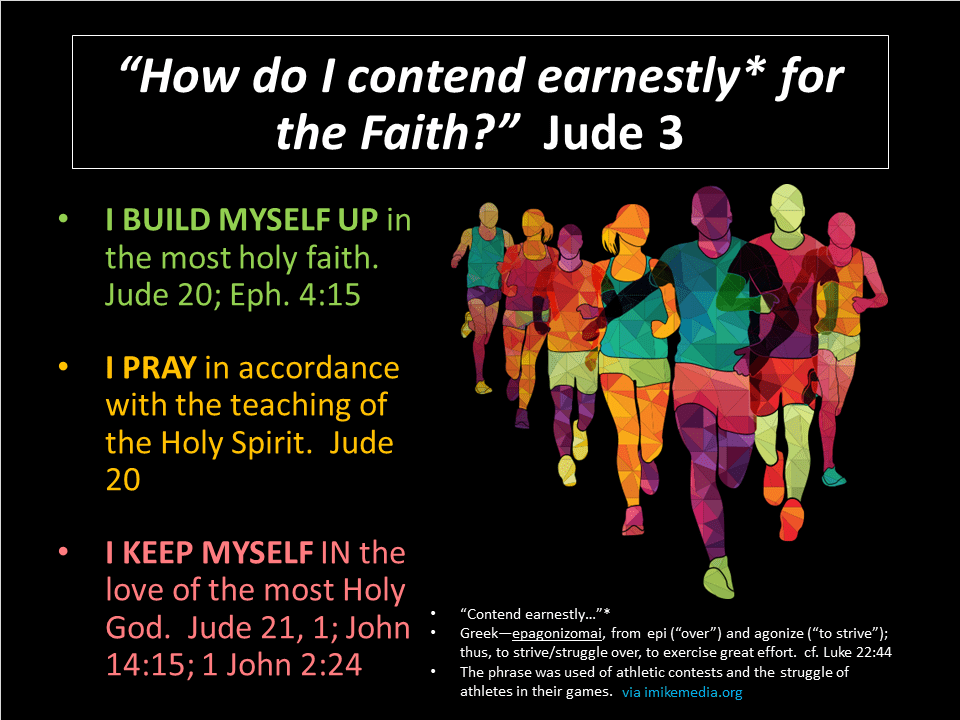

GOD IS T H E MASTER artist (Gen. 1:1, 27; Job 37:15-16; Psm. 8:3-6; 19:1; 33:6; 95:4-5; 104:1-4, 24-25; Isa. 42:5; Rom. 1:20; Heb. 1:2). Throughout His Word He often painted very graphic and evocative word pictures by means of metaphors.1
“But what exactly are metaphors?” you ask. Perhaps the easiest and best way to explain them is to describe what they do. Metaphors 1) compare two things, and 2) establish a similarity and connectivity between them. They 3) communicate ideas through vivid, three-dimensional verbal descriptions to show us how “A” is in some sense is like “B.”2
Pour carefully over the following Bible metaphors and note what they tell us about the nature and grandeur of God’s Word. “What is the Bible…?”
1 The Greek words, meta, meaning “over,” and pherein, meaning “to carry” suggest a transfer of meaning.
2 Leyland Ryken, “Metaphors in the Psalms,” http://www.turningpointsofthebible.com/wp-content/uploads/Metaphor-in-the-Psalms.pdf

THE RESURRECTION OF Jesus is the supreme F A C T of Christianity (Acts 2:24, 32). Yes, I said, “fact.” It is mentioned 300 times in the 260 chapters of the New Testament (i.e., on average at least once in every chapter).
Skeptics want you to believe that the resurrection was a deception.1 They claim it was an elaborate ruse designed to fool the masses.2 But do the charges of unbelievers hold up to real scrutiny and investigation? Read from the pen of the apostle Peter and then decide on your own:
Peter on Pentecost quoted David who wrote, “For You will not leave My soul in Hades, nor will You allow Your Holy One to see corruption” (Acts 2:27; cf. Psm. 16:8-10). Consider two questions pertaining to this verse:
1. WHOSE soul would not be left in the unseen spirit realm of Hades? Peter, a humble, uneducated fisherman (Acts 4:13; Luke 5:4-5, 10), showed that David’s thousand-year-old prophecy obviously couldn’t have applied to the patriarch himself because, “He is both dead and buried, and his tomb is with us to this day” (v. 29). David’s burial place still held David’s decayed remains and everybody in Acts 2 accepted that as fact.
2. WHO was the “Holy One” to whom David referred? After explaining that the remains of King David’s corpse were still in the tomb, Peter went on to identify the Holy One and why David was pointing to, and prophesying about, the Lord. Watch—“Therefore, being a prophet, and knowing that God had sworn with an oath to him that of the fruit of his (i.e., David’s—mb) body, according to the flesh, He would raise up the Christ to sit on his throne, he (David) foreseeing this, SPOKE CONCERNING THE RESURRECTION OF THE CHRIST…, nor did His flesh (Christ’s) see corruption. THIS JESUS GOD HAS RAISED UP, OF WHICH WE ARE ALL WITNESSES” (VV. 30-32).
Now ponder the implications of Peter’s arguments:
Atheists, skeptics, and unbelievers insist that the resurrection of Jesus was a fraud and an imposture. The Holy Spirit through Peter said otherwise. Whom will we believe, good reader…? “A faithful witness will not lie; but a false witness will utter lies” (Prov. 14:5). “Let God be true but every man a liar…” (Rom. 3:4).
1 Abdullah Kareem, “The Resurrection Hoax”: www.answeringchristianity.com/abdullah_smith/the_resurrection_hoax.htm
2 Ben Radfor, “Scholar Claims Jesus Was a Roman Hoax”: www.seeker.com/scholar-claims-jesus-was-a-roman-hoax-1767943845.html
3 J. W. McGarvey, “The Resurrection Christ Predicted by David,” vv. 25-31, New Commentary on Acts of the Apostles, Vol. 1, 33.
4 James D. Bales, “Death Could Not Hold Him,” The Hub of the Bible, 130.
5 Ibid, 131-132.
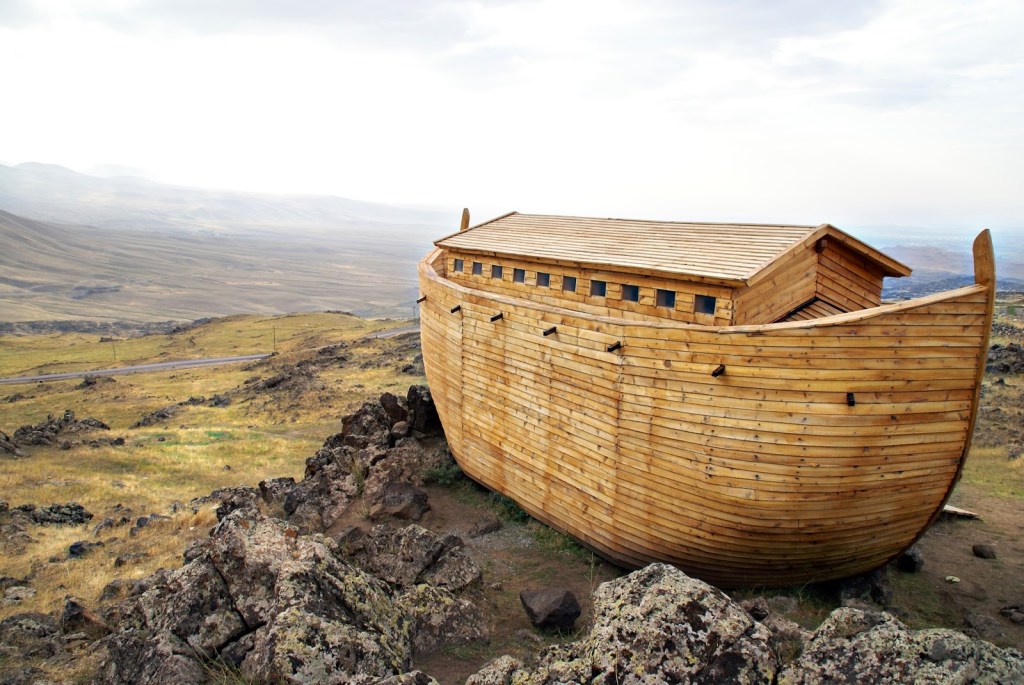
YOU HAVE TO hand it to old Noah. He was in a very special and elite class of individuals (Heb. 11:4ff). The aged patriarch possessed more than mental assent for deity (Jas. 2:19; cf. Jn. 12:42); he held a living faith that was active in spirit (Rom. 12:11; cf. Gen. 6:22; 7:5; Jas. 2:24). He was one of those rare breads of bi-vocational ministers who not only held down a full-time construction job (Gen. 6), but he simultaneously served as a (the!) full-time evangelist for the antediluvian assembly of God.1
And yet what really distinguished Noah from his peers (then as well as now), wasn’t just his firm conviction for what was yet unseen (Heb. 11:1, 7), but it was his undaunted courage to declare God’s Word. Note how the Bible describes him:
“And (God—v. 2) did not spare the ancient world, but saved NOAH, one of eight people, A PREACHER OF RIGHTEOUSNESS, bringing in the flood on the world of the ungodly” (2 Pet. 2:5).”
“Noah…a preacher…of righteousness…” Think about the implications of those words for a few moments and then consider:
I can hear what somebody is thinking. “Mike, how was Noah able to do that?” “How was one man able to preach to an entire world caught up in a spiritual pandemic of sin and unrighteousness?” Genesis tells us:
1. Noah preached with his WORDS. He was a (remember?) PREACHER (Rom. 10:14-18; 1 Tim. 2:7; 2 Tim. 2:1-7; 4:1-5) of righteousness (2 Pet. 2:5). He was one who heralded and verbally proclaimed the Word of God with conviction.4
2. Noah preached with his WORK. He “PREPARED an ark for the saving of his household, by which he condemned the world…” (Heb. 11:7b). The acts and sounds associated with building such a monumental boat shouted to the world that Noah was listening to God, that Noah was living for God, that Noah and his loved ones would be eventually saved by God (Gen. 6:22; 7:1, 5; cf. Mat. 5:16; 1 Thes. 4:11-12), and that those outside the ark would be condemned by God (Heb. 11:7; cf. 1 Cor. 11:32).
3. Noah preached with his WALK. As I said earlier, Noah’s faith wasn’t merely cognitive in nature, it was exertive. He was “PERFECT in his generations. [And he] walked with God” (Gen. 6:9).5 You could correctly say Noah was the only Bible that ancient unbelievers were ever able to read.
1 The “saved” were only those in the ark (cf. Acts 2:47).
2 “That word, ‘violence,”’ is especially telling—God had intended for man and animals to fill the earth, i.e. to reproduce. Instead, the created world has become filled with ‘violence.’ The Hebrew hamas means ‘cold-blooded and unscrupulous infringement of the personal rights of others, motivated by greed and hate and often making use of physical violence and brutality.’ We are dealing here with the darkest shades of human sinfulness—dark because violence is always a personal insult to God since each one of us bears His image.” Michael Whitworth, The Epic of God, 66.
3 https://www.secureamericanow.org/cities_defunding_police
4 https://biblehub.com/greek/2784.htm
5 Perfect or “blameless” does not suggest that he was sinless. The Hebrew term, thamim, does not mean living without sin or being morally perfect; it means being ‘complete’ or ‘wholehearted’ in regard one’s ‘commitment to the person and requirements of God.’ This idea of inner resolve to be wholly committed to God is reinforced by the statement that Noah was a man who ‘walked with God.’ Taken together, these descriptive phrases indicate that Noah was a man of high moral uprightness and integrity. He was faithful to God and upright in his dealings with his fellowman. He walked with God by reflecting the kind of attitude and lifestyle that would bring glory to his Creator, in contrast to the wickedness that had spread across the earth.” William W. Grasham, Genesis 1-22, Truth for Today Commentary, 219
 INCARNATE