
HEART PROMPT – OCT. 9
UNLESS YOU WORK at a funeral home for a living, it’s probably hard to think about a specific burial plot without experiencing some painful emotions.
The cold, mental image of A grave leads inevitably, inexorably to the mental image of THE grave—the sacred ground where your loved one’s body lies.
The association is inescapable.
The silent sepulcher whispers “finality.”
But that individual you loved and cherished with all your being was enclosed within a casket and consigned to the earth for just one reason.
He or she died.
Now for a few minutes try to think about death and burial in a different context.
Consider some Bible questions:
1. Is salvation by faith ALONE?
There are many sincere, religiously devoted people who genuinely and deeply believe that salvation is received at the moment of belief.
“The instant you accept Jesus into your heart, you enjoy the gift of salvation…”
“Just trust Him and He will save you right now…”
Some of my denominational friends will go so far to substantiate their assertion by referring to Scripture (cf. John 3:16; Acts 16:31; Eph. 2:8-9 et al).
Now let’s just agree that salvation IS by faith (Rom. 10:9; 1 Cor. 1:21; 1 John 5:4), but that’s not the same as saying we’re saved by faith ALONE (cf. Jas. 2:24).
Stay with me now…
2. WHY do we bury a loved one?
“Well Mike, like you said earlier – obviously because he or she has died…”
Think about that—good reader, not only in the physical realm, but more importantly in the spiritual.
Salvation by faith alone says that a person is saved at the instant of belief, but there’s a conspicuous problem with that doctrine that is often overlooked.
FAITH ALONE IGNORES A DEATH AND A BURIAL.
In order for a resurrection (i.e., salvation) to occur – either physically or spiritually, it MUST first be preceded by a death and a burial.
It’s DEATH, then BURIAL, THEN resurrection.
Religious pluralism today skips the death and burial and goes straight to resurrection.
Stay with me…
3. What does the story of Lazarus TEACH us?
Think about Jesus’ friend, Lazarus (cf. John 11:3) and consider the facts as they are recorded in the Word:
Now pick carefully through the details of the chapter and then ask one cogent question, “What HAD to happen first before Lazarus could be resurrected?”
Obviously, he had to die and be buried.
Now notice the connection between death, burial, resurrection and salvation…
4. What does resurrection REPRESENT?
Let’s permit Scripture answer this vitally important question.
Note first: “Or do you not know that as many of us as were baptized into Christ Jesus were baptized into His death? Therefore we were buried with Him through baptism into death, that just as Christ was raised from the dead by the glory of the Father, even so WE ALSO should walk in newness of life” (Rom. 6:3-4).
Look the passage carefully.
Question: According to Romans 6, what HAS to happen before a resurrection (either spiritual, or physical—like Lazarus’) can occur?
Answer: One HAS to die AND be buried.
But watch it again:
“Buried with Him in baptism, in which YOU ALSO were raised with Him through faith in the working of God, who raised Him from the dead” (Col. 2:12).
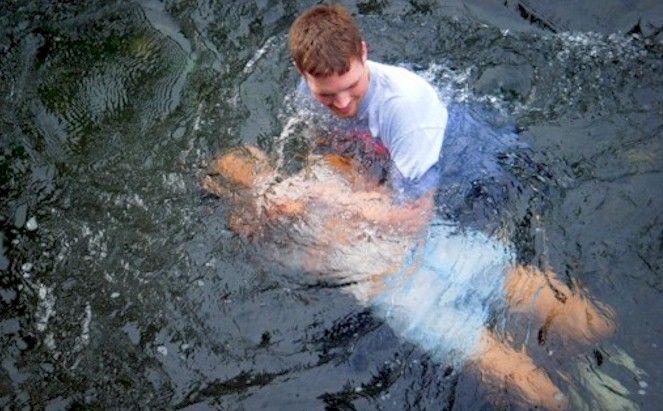
Romans and Colossians agree: An individual is buried WITH Jesus when he is immersed/buried in water (cf. Acts 8:38; Gal. 3:27; 1 Pet. 3:20-21), but just as Jesus died, was buried and then raised, an individual dies to his own selfish will, is buried in the watery-grave of baptism, and then is RAISED WITH JESUS.
RAISED.
What does raised signify?
Watch:
“He who believes AND IS BAPTIZED (i.e., buried) shall be saved” (i.e., raised) (Mark 16:15).
“Repent (i.e., die to yourself) and be baptized (be buried) everyone of you, in the name of Jesus Christ, for the remission of sins” (i.e., raised) (Acts 2:38).
“And now, why are you waiting? Arise, and be baptized (be buried), and wash away your sins (i.e., raised), calling on the name of the Lord” (Acts 22:16).
Watch:
“Shall be saved…”
“Remission of sins…”
“Wash away sins…”
But go back again to the apostle’s words in Romans 6: “That just as Christ was raised from the dead by the glory of the Father, even so we also should walk in newness of life.” 5 For if we have been united together in the likeness of His death, certainly we also shall be in the likeness of His resurrection, 6 knowing this, that our old man was crucified with Him, that the body of sin might be done away with, that we should no longer be slaves of sin. 7 For he who has died has been freed from sin. 8 Now if we died with Christ, we believe that we shall also live with Him…” (vv. 5-8).
“Shall be saved,” “remission of sins,” “wash away sins,” and “newness of life” ALL REFER TO THE SAME THING—the likeness of Christ’s resurrection.
After a person dies and is buried in the waters of baptism, he this is raised WITH Jesus through FAITH… (Col. 2).
Is he saved by faith (i.e., mental assent) ALONE, or is he saved by an obedient faith that meets the conditions that grace requires (Eph. 2:8-9)?
The answer is the latter.
5. “But what about WORKS?”
I can hear some honest objections.
“Mike, baptism is a work, and a person can’t be saved by works…”
The statement overlooks the fact that there are different KINDS of works mentioned in Scripture.
There are:
Let’s all agree that NO PERSON can save/resurrect himself by his own meritorious efforts.
Lazarus certainly couldn’t/didn’t resurrect himself.
But now go back to Col. 2: “You also were raised (i.e., saved—mb) with Him (When? When you came up out of the water) through faith (What kind of faith—dead or living? Jas. 2:14ff), IN THE WORKING OF GOD.
Who does the working?
Me?
You?!
A thousand times, “No!”
Only God can raise the dead!
Human activity cannot raise a dead man.
But dig even deeper.
“Not by works of righteousness (i.e., meritorious efforts) which WE HAVE DONE, but according to His mercy HE saved us through the washing of regeneration and renewing of the Holy Spirit” (Tit. 3:5).
Baptism is no more of a meritorious work than belief (cf. John 6:35).
But the inspired record in Titus explicitly says that a person is not saved by his own meritorious works, but by God’s mercy through a washing.
What’s the washing?
Baptism (i.e., burial in water) (cf. Acts 22:16).
Now, let’s put all of this together…
6. WHEN is a person raised with Jesus?
When he comes up out of the water of baptism.
The same Peter who said, “Repent and be baptized” in Acts 2 is the same Peter who said, “Baptism does now SAVE US” (1 Pet. 3:21).
But you can’t be saved, have your sins remitted, have your sins washed away, and be raised if you’ve never died and been buried.
Resurrection must first be proceeded by death and burial—just like Lazarus.
7. “But isn’t baptism JUST a symbol?”
My denominational friends teach that baptism is simply a symbol.
Let’s all agree that baptism IS a symbol (i.e., an outward sign), but it’s a symbol is based upon reality.
It’s obviously more than just a symbol.
Ironically, many skip an essential part of the symbol.
They tell us that immersion isn’t necessary.
“Mike, it’s just a sign alone….”
They say, “You’re saved/resurrected when you believe,” and then appeal to a few verses taken out of context.
8. Can we look at one Old Testament EXAMPLE together?
Read 2 Kings 5:1-19.
Was Naaman “saved” (i.e., cleansed) by faith?
Yes.
Was he saved by faith ALONE?
No.
His leprosy obviously wasn’t washed away the instant he believed, but when he was raised up out of the water following that seventh dip.
Was immersion simply a symbol?
Of course not.
Likewise, we’re not “washed”/saved/resurrected the instant we believe.
We have to believe to such an extent that our faith actually ACTS!
We have to die and be buried FIRST – in water.
Ananias asked Saul, “And now why are you waiting? Arise and be baptized, and WASH AWAY your sins…” (Acts 22:16).
God did the working.
Naaman was saved by God’s grace through obedient faith (cf. Eph. 2:8-9).
No amount of human endeavor and meritorious working could have made Naaman clean from his leprosy.
But when Naaman died to his own selfish will (vv. 11-14) and by obedient faith went down into the water of the Jordan (v. 14) and then came up that seventh time, he had washed away his leprosy—which is a SYMBOL of sin (cf. Lev. 13).
CONCLUSION:
“God loves you and I love you and that’s the way it’s gonna be!” – Mike
 INCARNATE