Author: imikemedia
Christian. Husband. Father. Grandfather. Evangelist. Son.
INCARNATE – NO FEAR IN DEATH

At the end of Hebrews 2, the Hebrew writer introduces the point that Jesus was a “merciful and faithful High Priest”, a point he will more fully develop later in the epistle. He notes that it was important for Jesus to experience the same things we experience so that he might be the perfect High Priest.
One of the experiences that he shared with us was death. And as a result of his death, he was able to do something that nobody else can do – take away the power of death and the fear of death. “Inasmuch then as the children have partaken of flesh and blood, He Himself likewise shared in the same, that through death He might destroy him who had the power of death, that is, the devil, 15 and release those who through fear of death were all their lifetime subject to bondage” (Heb. 2:14-15).
Many people don’t even like to talk about death. Death is scary on many fronts. It’s the fear of the unknown. We don’t know what death really feels like. We can’t see the other side, so we don’t really know what awaits us. Nobody has died and come back from the grave to tell us what it’s like. And death is so final. There is no return from death. Those who have died are not coming back to us. Death is the end…in many people’s minds.
It’s also scary for those who believe in being judged by God for the way they lived their life on earth. Knowing we have to answer for the things done in this life can be very scary – especially if we haven’t lived according to how we are instructed to live in the Bible.
We will not have another opportunity, once we die, to fix any wrongs we have committed. It will be too late to say “I’m sorry” to those we have offended. It will be too late to ask God for forgiveness for our rebellious ways. God will not give us a second chance. Actually, when we think about it, he’s already given us many second chances. Each day is another opportunity. But death is final. There will be no more last chances. That’s scary.
But these verses give us a couple of insights into death that are actually comforting for the Christian. First, death is the power of Satan. Death was not in God’s plan – life was. Remember in the Garden of Eden there was the Tree of Life. God did not want man to die, but due to the sin that Satan introduced into the world, death was also introduced. Too often, people blame God for death, for allowing people to die, for taking people’s lives. But death is not God’s fault. It’s our own fault for sinning, and death is from Satan.
God doesn’t want death for man. He wants life. Death is God’s enemy. Notice what Paul said to the Corinthians. “Then comes the end, when He delivers the kingdom to God the Father, when He puts an end to all rule and all authority and power. For He must reign till He has put all enemies under His feet. The last enemy that will be destroyed is death.” (1 Cor. 15:24-26) He will put an end to all authority and power. That includes Satan’s authority and power and the death over which he has power. That’s great news! Death will be defeated! God will overcome!
Because of this fact, we have no reason to fear death if we have been faithful to our God. While we don’t know exactly what death feels like, and while we don’t know exactly what we will experience and what we will see, we do know that ultimately Jesus is on the other side. We do know that death is not really final. We know it’s really just the beginning for Christians. We know that we will no longer be in bondage to the mortal and imperfect body. And we know that we have nothing to fear because Jesus has secured the victory on our behalf. Satan and his power has already been defeated by the resurrection of Jesus. What comforting thoughts!
This is why the funerals of Christians are actually joyous occasions instead of sad ones. They are going home. They get to go be with their Brother and their Father. They receive the comfort that we all desire. They have overcome the power and fear of death through Jesus Christ.
So what does this mean for me and you? First, we don’t need to let the fact of death cripple us in fear. Rather, we ought to use it as motivation. We know what lies ahead. Later in Hebrews, the writer says, “it is appointed for men to die once, but after this the judgment…”(Heb. 9:27). We need to be living our life with the understanding that death is final and that we will face the judgment of God afterwards. This life on earth is not all there is. We need to live our life with eternity in view rather than our typical myopic view seeing only the here and now.
And this also means we can rejoice in the victory over Satan and his power of death. And we don’t need to be fearful of death. Rather, we ought to look forward to it! Paul certainly did. “For I am hard-pressed between the two, having a desire to depart and be with Christ, which is far better” (Phil. 1:23). And Peter said we ought to look forward to the coming Day of the Lord” (2 Peter 3:12). We can only look for and hasten the coming of the Lord if we are faithful to him. What a day that will be! A day of victory! And the beginning of an eternity with our Father. BY MARSHALL REID
“GOD LOVES YOU AND I LOVE YOU AND THAT’S THE WAY IT’S GONNA BE!” – MIKE
HEART PROMPT – MAR 15

TODAY’S PRAISE – MAR 15
INCARNATE – THE SAMARITAN WOMAN
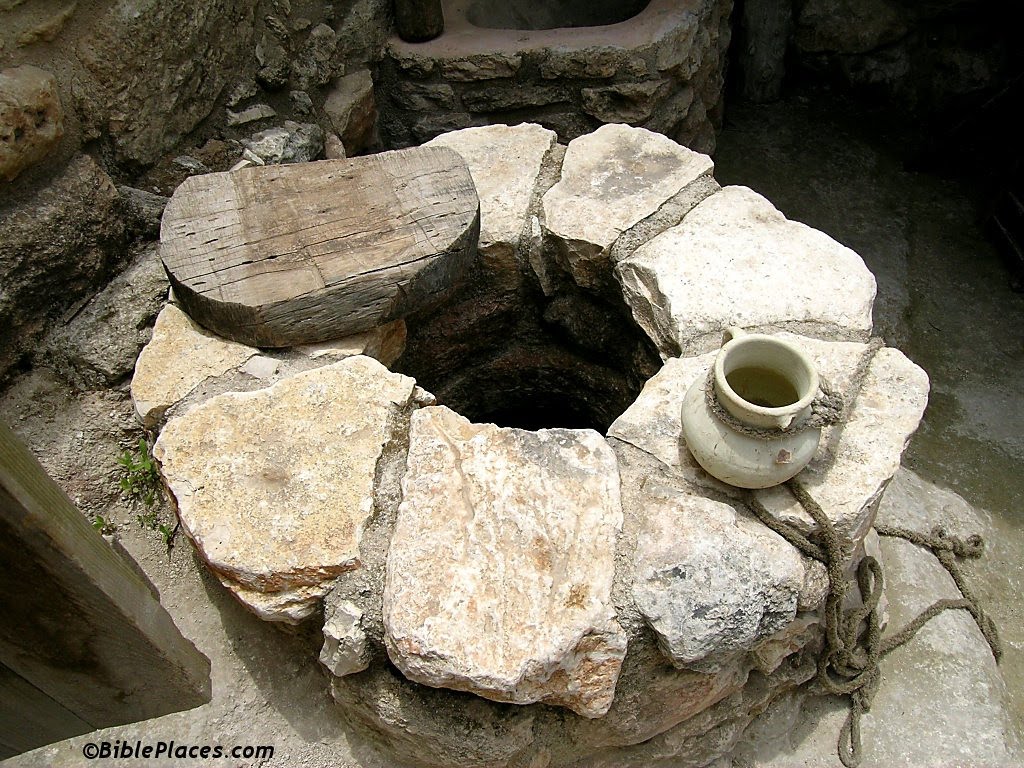
In John 4, our Lord ministered to a variety of people because they had faith in Him. For example, the Samaritan woman. Samaria was a place hated by many Jews because they were a mixed race, part Jew and part Gentile which stems back to the Assyrian captivity in 727 B.C. And, since the Jews in just about every way rejected them, the Samaritans even had their own temple and religious services on Mt. Gerizim.
Well, as Jesus left Judea and started toward Galilee, his journey went through Samaria, where he met this woman at Jacob’s well around noon, which was the usual time for women to come for water. Well, it was not considered proper for any man to speak in public to a strange woman (Jn. 4:27). But, customs aside, Jesus opens the conversation with, “Give me to drink” which became a way to share the truth about “living water.” See, Jesus adapted this situation, as we should, about speaking of the ways of God to others. And so, Jesus offers her eternal life (Jn. 1:26).
As Jesus speaks about spiritual waters, the woman at the well interpreted his words as literal water (vs. 11-15) and she was concerned about how He would obtain the water. Well, Jesus said, “Whosoever continues to drink of this material water (or anything the world has to offer) will thirst again. But whosoever takes one drink of the water I give will never thirst again!” And, how true it is that the things of this world never completely satisfy. Even in torment today, people are crying, “I thirst!” Well, the woman’s immediate response was to ask for this gift, but she did not know what she was saying.
Beginning in vs. 16, Jesus begins prepares the soil of her heart, which begins with conviction, which is why Jesus told her to go get her husband. Jesus aroused her mind and stirred her emotions, but in doing so, he touched her conscience, and that meant dealing with her sin. So she said, “I have no husband” because now she was under conviction and her “mouth was stopped” (Rom. 3:19). But, instead of Jesus bashing her because of her sin, he teaches her about her religion and revealed her spiritual ignorance in that: she did not know who to worship, where to worship, or how to worship! Jesus was showing that not all religions are acceptable before God and that some worshipers act in ignorance and unbelief. Only those who obey the truth can worship God acceptably (Jn. 4;23-24). This ignorance is further exposed by Stephen (Acts 7) and by Jesus (Jn. 3:1-7).
Well, despite her ignorance, in vs. 25-30, there was one truth this woman did know: the Messiah was coming and would reveal the secrets of hearts. This truth was buried in her heart until that very hour, and now here the Lord says, “I that speak to thee, am!” At this point, the woman put her faith in Jesus Christ and immediately wanted to tell others, so she went into the village and told the men she had met the Christ. And, she was in such a hurry to tell others, she left her waterpots behind (vs. 28) with the intentions to come back.
Now, during this time, the disciples had gone to buy food (vs. 8) and upon returning, they were shocked that Jesus was speaking to a Samaritan woman (vs. 31-38). And, after the woman left, they urged Jesus to share the meal with them, because they knew that He was hungry. Instead though, Jesus said, “I have food to eat that ye know not of”. Well they did not understand this in which Jesus explained that doing the Father’s will, in this case, leading the woman to faith in Him, was true nourishment for his soul. So, while the disciples were satisfied with bread, Jesus was satisfied with accomplishing the Father’s work as we should be or as the psalmist said, “I delight to do Thy will, 0 my God; yea, Thy Law is within my heart” (Ps. 40:8).
Next in his conversation with his disciples, Jesus speaks of the harvest and quoted a familiar Jewish proverb about waiting for it as he is pointing to the villagers coming out to the well to meet Him, thanks to the woman. Here it is interesting that the disciples went to the village to buy food. But, the woman went into the village to teach others, like we are to plant the seed of God’s word (Matt. 13; 1 Cor. 3:6-9). Yet, it is interesting that the text indicates that others had labored in Samaria and had prepared the way for this harvest (vs. 38). Now, we don’t know who they were, but the disciples were learning here that they were not alone in the work of the Lord and must never look on any opportunity for teaching as wasted time and energy. It takes faith to plow the soil and plant the seed, but God has promised a harvest (Ps. 126:5-6; Gal. 6:9).
Well as I said, in vs. 39-42, many of the Samaritans believed because of this woman and were so excited about Him, that they begged Him to stay with them; and He stayed for two days. During that short time, His word produced fruit in their lives. These people trusted in what the woman said and soon trusted the Word taught by the Savior and declared him the Saviour of the world (vs. 42). This unnamed Samaritan woman was a fruitful believer: she bore fruit (“many believed”), more fruit (“many more believed”), and today continues to bear “much fruit” to the glory of God (Jn. 15:1-5). Nobody knows how many lost sinners have come to the Saviour because of the teaching of this woman recorded in John 4.
Well, in vs. 43-54, Jesus leaves the country and continues his journey to Galilee and came to Cana where he attended a wedding feast where the first miracle is recorded and came at the request of His mother (John 2:1-5). But then, we see a second miracle at the request of a nobleman to heal his dying son (vs. 47) in which our Lord seems to lament over the spiritual condition of the people in general. But, the nobleman made two mistakes in his thinking: that Jesus had to go to Capernaum to save the lad, and that if the boy died meanwhile, it was too late. So, Jesus simply said, “Go thy way; thy son liveth” (John 4:50) and so, the man believed Jesus and started to return home and as he went, his servants started out to find him so they could share the good news that the boy had been healed at the seventh hour, which, in Roman time, would be 7 o’clock in the evening. When the father and the servants met the next day, their report confirmed his faith. Indeed, the boy had been completely healed! This is one of a few miracles that Jesus performed “at a distance” (Matt. 8:5-13; Matt. 15:21-28). BY ROBERT NOTGRASS
“GOD LOVES YOU AND I LOVE YOU AND THAT’S THE WAY IT’S GONNA BE!” – MIKE
 INCARNATE