INCARNATE 02.24.20
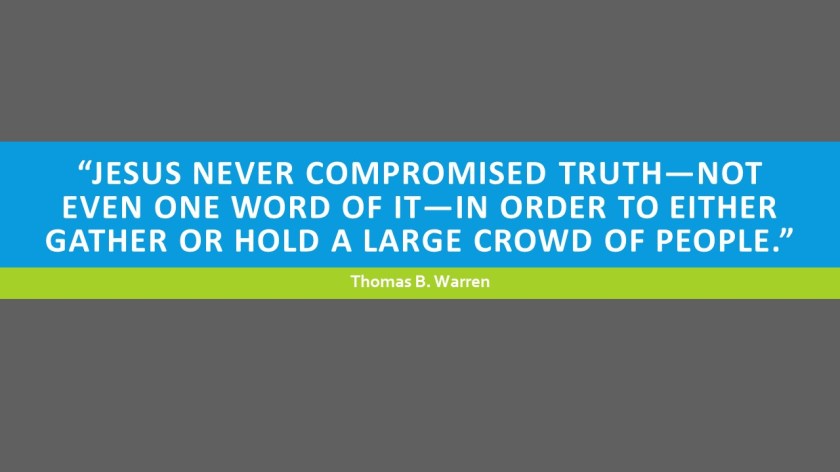
Jesus never compromised truth–not even one word of it–in order to either gather or hold a large crowd of people…”
Jesus never compromised truth–not even one word of it–in order to either gather or hold a large crowd of people…”
The baseball didn’t just smash through your window for no reason…

IMAGINE YOU’RE SITTING in your living room, enjoying a peaceful afternoon while reading the paper.
Suddenly, a baseball flies into the room, shattering your window.
Obviously, your first question wouldn’t be, “How did it get here?”
It would be, in a highly bothered tone, “Who did this?!”
The baseball didn’t just smash through your window for no reason.
Some agent acted upon it, causing a “disturbance in the force” that ruined your perfectly good afternoon.
The universe couldn’t have just “arrived” without a force behind it. And unlike the remote possibility that a pitching machine spat a baseball into your living room instead of an actual person, it’s impossible that a universe was just spat out by an inanimate force. It took a Person, a Someone. Holding the Bible at its word, we Christians believe that Someone to be God, the Great Cause (Alex McFarland).
“This is the history of the heavens and the earth when they were created, in the day that the Lord God made the earth and the heavens” (Gen. 2:4).

SINCE EARLY CHILDHOOD I have heard people say that it does not make any difference what we believe, that if we are honest and sincere about it, God will save us anyway.
Have you ever made such a statement?
Most likely you have heard your preacher say the same thing. If he has, ask him for the verse in the Bible. You have made this kind of statement because your have heard preachers make it, and naturally you thought it must be so. But if your preacher has been making it, he must have some reason for it since he claims to be following and teaching the Bible. He should make such statements providing the Bible says so. And if the Bible says so, he will know where to find it. So ask him to give you the book, chapter, and verse.
Notice this scripture from 2 Thessalonians 2:11-12: “And for this cause God shall send them strong delusion, that they should believe a lie: that they all might be damned who believed not the truth, but had pleasure in unrighteousness” (KJV).
This indeed is a very plain statement. It positively says that some would “believe a lie.” Certainly there is a vast difference between believing a lie and believing the truth. The truth is recorded in the word of God. If it is not taught in the word of God, it must be a lie.
Does it make any difference which of these one believes?
The general idea is that it does not matter, provided one is sincere. Of course, he could not believe anything unless he is sincere.
A person might pretend o believe a think and be insincere about it. But if he actually believes it, he must be sincere.
So the Bible speaks of men who are sincere, for it actually says they will “believe a lie.” But what of their sincerity? Will that atone for their mistake? Will God save them anyway, just because they are honest about it? Is that what the Bible said? No, that is not the way it reads at all.
Observe verse 12 again: “THAT THEY ALL MIGHT BE DAMNED WHO BELIEVED NOT THE TRUTH.”
Notice the word “damned.” This means the very opposite of “saved.” Yet we are told that certain men would be damned. But who were to be damned? All those who believed a lie or believed not the truth.
It does make quite a difference what a person believes! For if one is to be saved, he must believe the truth. To believe something else will result in damnation – regardless of how sincere a person might be. (Garland Elkins, “Does Honesty Make Error Truth?,” Come and See).
“There is a way that seems right to a man, But its end is the way of death” (Prov. 14:12).
There are several reasons for elders taking heed to themselves. One reason is because elders have a soul to save, viz., their own…
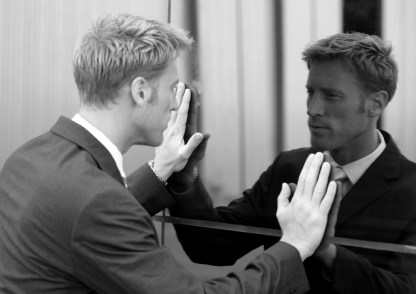
PAUL’S ADMONITION TO the elders of the church of Christ at Ephesus is a pertinent challenge to all elders. An analysis of this inspired advice to the Ephesian bishops shows the importance of elders taking heed to themselves…
Paul urged, “Take heed to thyself…” The word translated “heed” literally means: “to hold to, . . .turn one’s attention to . . .” There are several reasons for elders taking heed to themselves. One reason is because elders have a soul to save, viz., their own (Mat. 16:26). Elders, like preachers, may become preoccupied with the spiritual needs of others to the degree that they lose sight of their own spiritual liabilities and personal needs.
As surely as elders must be men of great spiritual stature they must “take time to be holy.” Spiritual development and maturity is a process which involves prayer, devotional Bible reading, and meditation on things of God (Psa. 1; 119; 2 Tim. 2:15; Phil. 4:8).
Elders are not immune to temptation. They may give in to sin, succumb to subtle solicitations to violate or neglect the will of God, and they may become discouraged with their own efforts to live the Christian life and/or the efforts of others.
There is another reason elders must “turn attention” to themselves: elders lead in spiritual matters by example. They must be diligent in developing and maintaining a godly character. Can a spiritual pygmy successfully lead the saints of God? Elders must spiritually “stand head and shoulders” over the crowd. The concept of church edification means that God’s people grow and develop spiritually. They develop Christlike characters. But Christlike leaders must show the spirituality and demonstrate the possibility of accomplishment in this vital area of Christian living. (Tom Holland, “ELDERS – THEIR DUTY OF SELF-EXAMINATION,” The Spiritual Sword, Vol. 9, Ap., 1978, Num. 3, 8).
“Therefore take heed to yourselves and to all the flock, among which the Holy Spirit has made you overseers, to shepherd the church of God which He purchased with His own blood” (Acts 20:28).
The Lord purposely steered this little band of future church leaders into the tempest and then went to the back of the boat to lay down on a cushion for a power nap…
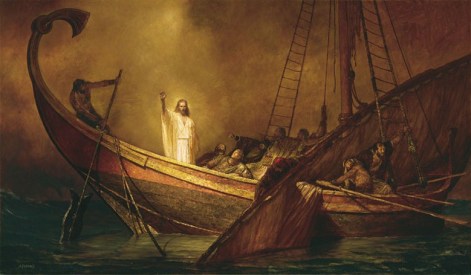
Matthew and Luke don’t bear this out in their records, but they do tell us about the disciple’s fear: “Then His disciples came to Him and awoke Him, saying, ‘Lord, save us! We are perishing!’” (Mat. 8:25). “And they came to Him and awoke Him, saying, ‘Master, Master, we are perishing…!’” (Luke 8:24).
But Mark uniquely communicates their aggregate anxiety in the form of a question: “But He was in the stern, asleep on a pillow. And they awoke Him and said to Him, ‘Teacher, do You not care that we are perishing?’” (Mark 4:38). The NET version translates it, “Teacher, don’t you care that we are about to die?”
What strikes me about this entire episode is that—put your seat belt on—JESUS INTENTIONALLY LED THE GROUP INTO THE STORM. You might need to read that again because it’s not a misprint.
Yes, the Lord purposely steered this little band of future church leaders into the tempest and then went to the back of the boat to lay down on a cushion for a power nap: “Now when He got into a boat, His disciples FOLLOWED Him” (Mat. 8:23). “On the same day, when evening had come, He said to them, “Let us cross over to the other side.” (Mark 4:35). “Now it happened, on a certain day, that He got into a boat with His disciples. And He said to them, ‘Let us cross over to the other side of the lake.’ (Luke 8:22). That’s right—it was Jesus who led the group on this frightening excursion.
And that’s because He was eventually going to leave the early church in the hands of this weak rabble of Jewish devotees. And one of the ways THEY would learn to trust in Him and lead with such courage was by riding it out on the whitecaps and watching His deliverance. “Teacher, don’t you care that we are about to die?”
Did Jesus care?! Of course He cared—and that’s why He took them out on the boat trip across Galilee in the first place!
The disciples obviously knew that He had miraculous ability or they never would have awakened Him. They had witnessed His mighty works and knew something of His identity. If they believed that He was impotent to affect change on the circumstances they would have never roused Him from His slumber. You see, they knew that He had power; they just didn’t recognize that He had ALL power—over sickness and disease, over sin, over the grave, over demonic forces, and even over the elements themselves.
Jesus cared so much that He let them learn that important lesson out on the troubled waters of the sea.
Want a mustard seed for today?
If your boat is filling up with water from the monsoon, if the wind looks to collapse your sails and shatter your mast, IT COULD BE that’s exactly where the Lord wants you to be. You see, SOMETIMES Jesus takes you out on the lake and let’s you watch the squall (to the point where you think you’re going to die! Mark 4:38) so that you can learn to lean on and trust in Him!
If you never get scared, how will you ever learn to place your whole-hearted faith in Him (Job 13:15)?! How else can you learn that He really cares (1 Pet. 5:7)?
What really makes me chuckle about his storm story is that one minute the disciples are afraid of the wind and waves, and then the next minute, they’re really afraid of the Man who stopped it all with a sentence. “And they feared exceedingly, and said to one another, ‘Who can this be, that even the wind and the sea obey Him!” (Mark 4:41). What a way to learn and build faith!
Are you afraid? Is your craft about to capsize?
I have a recommendation. Don’t ask Jesus if He cares, because He does. Ask Him and trust Him…to calm the storm…in your heart (Phil. 4:6-7).
 INCARNATE