Do You Remember the Tragedy?

Tribute in Light

I HAVE A vivid recollection of that day.

My wife came in the room, turned on the TV set and then spoke in shaken tones. 

She said, “They’ve flown a jet-liner into one of the World Trade Center towers in New York…”

For the next several hours I sat transfixed before the television and watched in horror as the events of 911 unfolded.

wtc3

Twentyfour years after that dreadful day, some Americans, like myself, look back on September 11 with intense emotion.

We recall those gaping wounds in the sides of the towers.

We remember those ill-fated flights and how they were intentionally slammed into the very icons of our nation.

We remember those thick plumes of noxious smoke as they bellowed out of the top of those lofty skyscrapers and into our collective conscience.

We remember our own anxiety and ponder what must have raced through the hearts of fellow-citizens as they contemplated the end of their earthly existence and the brevity of human life.

We remember the internal shock of watching the first, and then the second tower plummet to the ground.

We remember those feelings of helplessness and despair as lower Manhattan was engulfed in ash and debris. 

But may I suggest, dear reader, that there is a far more terrible tragedy that warrants our joint remembrance.

Every first day of the week (Acts 20:7), we need to call to memory (1 Cor. 11:23-26) those horrific events which transpired nearly 2,000 years ago:

  • We need to remember the murderous plot against the innocent Son (Mt. 26:3-4; Heb. 4:15; 7:26).
  • We need to remember the Lord’s internal struggle as He pondered His impending death (Mt. 26:37-39).
  • We need to remember His betrayal at the hands of one of His own disciples (Mt. 26:47-50).
  • We need to remember the ill-informed attempt to thwart His crucifixion (Mt. 26:51-54).
  • We need to remember the disciples’ cowardice and how they fled for their lives when He needed them the most (Mt. 26:56).
  • We need to remember the howls of the angry mob as they shouted, “Crucify Him! Crucify Him!” (Mk. 15:13-14).
  • We need to remember the incredible injustice of both the Jewish and Roman courts (Mt. 26:57ff).
  • We need to remember Pilate’s timidity before that blood-thirsty crowd (Mt. 27:24-26; Lk. 23:13-25).
  • We need to remember the brutal flogging (i.e., “little death”) at the hands of the Roman lictors (Jn. 19:1).
  • We need to remember Peter’s lying about his association with Jesus (Mt. 26:69-75).
  • We need to remember the slanderous mockery of the soldiers, priests, and thieves (Mt. 27:27ff; 39-44).
  • We need to remember the Lord’s humiliation as He was stripped of His clothing and numbered with lawless, ungodly men (Isa. 53:12; Mt. 27:28; Heb. 12:2).
  • We need to remember that ruthless blow to His head (Mt. 27:30). We need to remember the heavy burden of the cross that was thrust upon His weary shoulders (Mt. 27:32).
  • We need to remember those cruel nails that pierced His hands and feet and how that He was suspended between holy God and sinful man (Jn. 3:14; 12:34).
  • We need to remember the bitter taste of sour wine mingled with gall (Mt. 27:34).
  • We need to remember His desperate cry to His own Father (Mt. 27:46).
  • We need to remember the frightful earthquake that shook the earth the moment the Savior died (Mt. 27:54).
  • Perhaps most importantly, we need to remember that our own sins made this barbaric occasion necessary (1 Pet. 2:24; Isa. 53). 

“Lest I forget Gethsemane, lest I forget Thine agony, lest I forget Thy love for me, lead me to Calvary.”

“Do this in remembrance of Me…” (1 Cor. 11:24, 25).

WHERE DID PRAYER FIT IN THE LIFE OF JESUS?

prayer, #prayer, #praying, jesus, #jesus,
Photo by Matheus Bertelli @ Pexels

JESUS TAUGHT THROUGH Paul that Christians ought to “pray constantly” (1 Thes. 5:17 CSB; cf. Jn. 16:13). While He obviously did not pray unceasingly, at least in the sense of never stopping, His life was marked and accentuated by prayer. The Lord was always in a prayerful mode. Consider the testimony of Scripture:

IN MATTHEW

He taught the inconsistency of a hypocritical life and prayer. 6:5-8

He trained His disciples about how to pray. 6:9-13

He thanked His Father in a brief prayer after being rejected by certain cities in Galilee. 11:25-27

He prayed up on a mountain by Himself after the thousands tried to force Him to become their king. 14:23; cf. Mk. 6:46; Jn. 6:15

He prayed and gave thanks before miraculously feeding the 4000. 15:36

He prayed for and put His hands on little children. 19:13; cf. Mk. 10:13-16; Lk. 18:15-17

He prayed at the institution of the Lord’s Supper. 26:26; cf. Mk. 14:22-23; Lk. 22:19

He offered the same fervent prayer three times in Gethsemane before His betrayal. 26:39, 42, 44; cf. Mk. 14:32-42; Lk. 22:39-46; Heb. 5:7

He cried out to His Father in prayer and identified Himself as the Messiah. 27:46

IN MARK

He arose long before daybreak and got off by Himself to pray before His first sermon in Galilee. 1:35

He taught a relationship between prayer and fasting. 9:29

He taught the apostles to pray in belief. 11:24

He taught that prayers are accepted contingent upon our forgiving others. 11:25-26

He fell prostrate on the ground and asked His Father to deliver Him from the cross. 14:35, 39

IN LUKE

He prayed at His own baptism. 3:21

He habitually withdrew into the wilderness alone to pray. 5:16

He prayed all night before selecting the twelve. 6:12-13

He was praying at His transfiguration. 9:28-29

He prayed after hearing the report of the seventy. 10:17-19, 20-21

He taught about the importance of persistence in prayer. 18:1ff

He prayed that Peter’s faith would not fail. 22:32

He withdrew about a stone’s throw from Peter, James, and John and knelt to pray in Gethsemane. 22:41

He prayed such a fervent, intense prayer in Gethsemane that His sweat became like drops of blood. 22:44

He prayed that the Father would forgive those who crucified Him in ignorance. 23:34

He prayed right before He died that the Father would accept His spirit. 23:46

He prayed before the meal with the disciples at Emmaus. 24:30

IN JOHN

He prayed in public at the tomb of Lazarus. 11:41-42

He prayed that He would glorify His Father in His crucifixion. 12:27-28

He prayed the “High Priestly” prayer for Himself and His disciples. 17

Jesus recognized the necessity of being in constant communication and intimate communion with His Father. He exemplified the concept of pray and was strengthened as He walked in Heaven’s will. Let’s emulate Him (1 Cor. 11:1).

“God loves you and I love you and that’s the way it’s gonna be!” –Mike

SHOULD WE LISTEN TO MOSES OR JESUS?

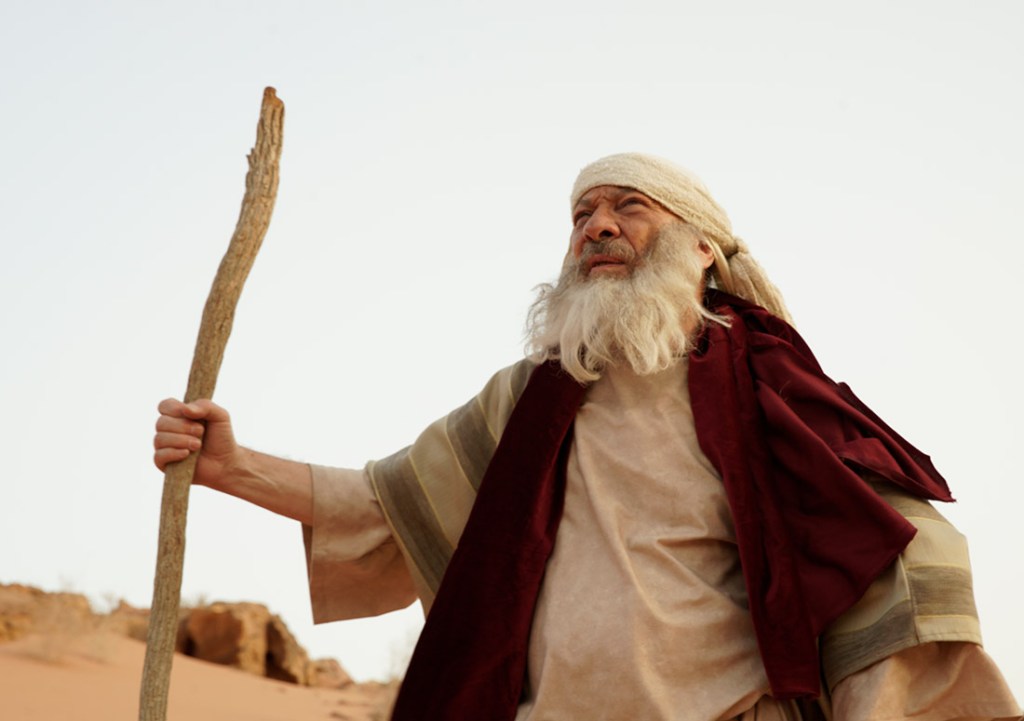
ALMOST 1,400 YEARS before Jesus came in the flesh, Moses told the Israelites: 

“The LORD your God will raise up for you a Prophet like me from your midst, from your brethren.  Him you shall hear” (Deuteronomy 18:15; emphasis mine—mb). 

Centuries later, after the Lord fed the five thousand with loaves and fish, the people realized the fulfillment of this ancient prophecy.  “Then those men, when they had seen the sign that Jesus did, said, ‘This is truly THE PROPHET who is to come into the world’” (John 6:14).

The apostle Peter later confirmed this when he preached at Solomon’s porch, For Moses truly said to the fathers, ‘The Lord your God will raise up for you A PROPHET like me from your brethren. Him you shall hear in all things, whatever He says to you.  And it shall be that every soul who will not hear THAT PROPHET shall be utterly destroyed from among the people’” (Acts 3:22-23).  The martyr, Stephen, also declared this truth (cf. Acts 7:37-38). 

But how was Jesus a prophet like Moses?  Study the following passages and note the striking parallels: 

1.  Both were sent from God.  Exodus 3:1ff; John 8:42

2.  Both were born under foreign rule.  Exodus 1:8-14; Luke 2:1

3.  Both, as infants, were threatened by wicked monarchs.  Exodus 1:15-16; Matthew 2:16

4.  Both spent their early years in Egypt and were miraculously protected from harm.  Exodus 2:10; Matthew 2:14-15

5.  Both rejected the offer and opportunity to become world rulers.  Hebrews 11:24; Matthew 4:8-9

6.  Both were initially rejected by their peers.  Exodus 32:1; Isaiah 53:3; Matthew 27:21-22; John 1:11

7.  Both suffered disrespect.  Numbers 16; John 12:37; Mark 6:4

8.  Both had family who let them down.  Numbers 12:1; John 7:5

9.  Both were teachers.  Deuteronomy 4:1-5; Matthew 22:16; John 3:2

10.  Both were prophets and spoke on behalf of God.  Exodus 4:15; John 8:26

11.  Both knew God on an intimate level.  Exodus 33:11; Deuteronomy 34:10; John 1:18

12.  Both spoke directly to God.  Exodus 3:1-10; Deuteronomy 34:10; Luke 9:34-36

13.  Both gave the people bread from heaven.  Exodus 16:14-15; John 6

14.  Both performed miracles.  Exodus 4:1ff; Deuteronomy 34:10-12; John 5:36

15.  Both were deliverers—Moses delivered Israel from the bondage of Pharaoh; Jesus delivered spiritual Israel, the church, from the bondage of Satan.

16.  Both were shepherds.  Exodus 3:1; John 10:10-11; Matthew 9:36

17.  Both were baptized.  1 Corinthians 10:1-2; Matthew 3:13-17

17.  Both fasted forty days in the wilderness.  Exodus 34:28; Matthew 4:2

18.  Both were mediators.  Deuteronomy 4:5; Exodus 32; Hebrews 8:6; 1 Timothy 2:5

19.  Both of their faces shone with the glory of heaven.  Exodus 34:34-35; Matthew 17:12

20.  As Moses lifted up the bronze serpent in the wilderness to heal the people, so Jesus was lifted up on the cross to heal obedient believers from their sins.  Numbers 21:8-9; John 3:14; 12:32

21.  As Moses sent out twelve spies to explore Canaan, Jesus sent out twelve apostles to reach the world.  Numbers 13; Matthew 10:1

Even though there are many other similarities which the two share in common, God made it clear whom we are to follow and obeyWhile he was still speaking, behold, a bright cloud overshadowed them; and suddenly a voice came out of the cloud, saying, “This is My beloved Son, in whom I am well pleased. Hear Him” (Matthew  17:5). 

WHAT SONGBOOK DID JESUS SING FROM?

Jesus had a favorite songbook.

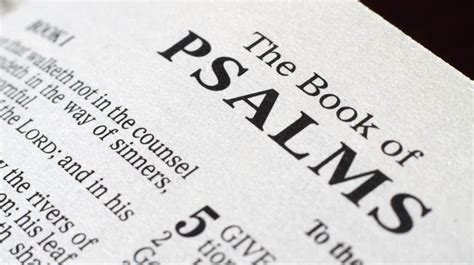
THINK ABOUT IT. Jesus was a Jew—and when He and His first-century Hebrew peers engaged in vocal worship (cf. Mat. 26:26-30), they used a songbook of sorts. Of course, there were obviously no spiralbound or hardbound songbooks to read from, and there were no electronic Paperless Hymnals to display on a screen like we use in the 21st century.

So what specific hymnal did the Jews employ? Was it some form of OT Christian Hymns III, or Praise for the LORD, or Great Songs of the OT Church, or OT Church Gospel Songs and Hymns? All kidding aside, the songbook of the Jews was—the Psalms (cf. 1 Chron. 16:8-36), written and collected from Moses to Ezra over a period of a thousand years, which were then committed to memory. The English title “Psalms” comes from the Greek word meaning “a sacred song or hymn—a Psalter,” while the Hebrew title, Tehillim, means “praises,” and every Psalm except the 88th contains some form of that fervent action. So when the Jews offered up the sacrifice of praise (cf. Psa. 27:6; Heb. 13:15), they didn’t simply quote the Psalms, they joyfully sang and shouted them, and THAT was the songbook our Lord used when He sang as well.

But this then begs yet another question. Since the Psalms served as the songbook of the Jews, who wrote and authored all of these psalters? Peter says, “Holy men of God spoke as they were moved by the Holy Spirit” (2 Pet. 1:21b), and yet the Holy Spirit received His words from Jesus (cf. John 14:14-17; 16:13-15)!

Here’s ONE lesson I’m learning: Jesus sang from the songbook which He wrote Himself—and one of His favorite subjects was—are you ready for this(?), THANKSGIVING to His Father!  Watch the repetitive refrain in the following Psalms: 

“Therefore I will GIVE THANKS to You, O LORD, among the Gentiles, and sing praises to Your name” (Psa. 18:49).

“Sing praise to the LORD, you saints of His, and GIVE THANKS at the remembrance of His holy name” (Psa. 30:4).

“To the end that my glory my sing praise to You and not be silent. O LORD my God, I will GIVE THANKS to You forever” (Psa. 30:12).

“I will GIVE YOU THANKS in the great assembly; I will praise You among many people” (Psa. 35:18).

“Offer to God THANKSGIVING, and pay your vows to the Most High” (Psa. 50:14).

“I will praise the name of God with a song, and will magnify Him with THANKSGIVING” (Psa. 69:30).

“We GIVE THANKS to You, O God, we GIVE THANKS! For Your wondrous works declare that Your name is near” (Psa. 75:1).

“So we, Your people and sheep of Your pasture, will GIVE YOU THANKS forever; we will show forth Your praise to all generations” (Psa. 79:13).

“It is a good thing to GIVE THANKS unto the LORD, and to sing praises unto Thy name, O most High” (Psa. 92:1).

“Let us come before His presence with THANKSGIVING; let us shout joyfully to Him with psalms” (Psa. 95:2).

“Rejoice in the LORD, you righteous, and GIVE THANKS at the remembrance of His holy name” (Psa. 97:12).

“Enter into His gates with thanksgiving, and into His courts with praise. Be THANKFUL to Him, and bless His name” (Psa. 100:4).

“Oh, GIVE THANKS to the LORD, for He is good! For His mercy endures forever” (Psa. 106:1).

“Save us, O LORD our God, and gather us from among the Gentiles, to GIVE THANKS to Your holy name, to triumph in Your praise” (Psa. 106:47).

“Oh, that men would GIVE THANKS TO THE lord FOR His goodness, and for His wonderful works to the children of men” (Psa. 107:8, 15, 31)!

“Oh, GIVE THANKS to the LORD, for He is good! For His mercy endures forever” (Psa. 118:1, 29).

“At midnight I will rise to GIVE THANKS to You, because of Your righteous judgments” (Psa. 119:62).

  • Jesus sang.
  • Jesus sang from the psalmbook which He had written.
  • Jesus offered the praise of thanksgiving to His Father.

In a world where we are tempted to complain and fuss about the current state of affairs, I’m learning from Jesus that I need be more thankful, and one of the best ways to do that is by singing with a heart of zealous gratitude as He did (Heb. 2:12):  “Speaking to one another in psalms and hymns and spiritual songs, singing and making melody in your heart to the Lord, GIVING THANKS always for all things to God the Father in the name of our Lord Jesus Christ” (Eph. 5:19-20).

Teacher, Do You Not Care?

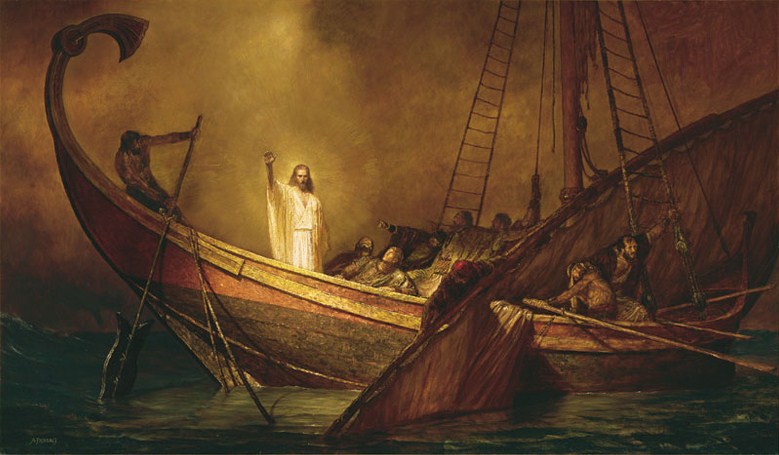
The Lord purposely steered this little band of future church leaders into the tempest and then went to the back of the boat to lay down on a cushion for a power nap…

storm

Matthew and Luke don’t bear this out in their records, but they do tell us about the disciple’s fear: “Then His disciples came to Him and awoke Him, saying, ‘Lord, save us! We are perishing!’” (Mat. 8:25). “And they came to Him and awoke Him, saying, ‘Master, Master, we are perishing…!’” (Luke 8:24).

But Mark uniquely communicates their aggregate anxiety in the form of a question: “But He was in the stern, asleep on a pillow. And they awoke Him and said to Him, ‘Teacher, do You not care that we are perishing?’” (Mark 4:38). The NET version translates it, “Teacher, don’t you care that we are about to die?”

What strikes me about this entire episode is that—put your seat belt on—JESUS INTENTIONALLY LED THE GROUP INTO THE STORM. You might need to read that again because it’s not a misprint.

Yes, the Lord purposely steered this little band of future church leaders into the tempest and then went to the back of the boat to lay down on a cushion for a power nap: “Now when He got into a boat, His disciples FOLLOWED Him” (Mat. 8:23). “On the same day, when evening had come, He said to them, “Let us cross over to the other side.” (Mark 4:35). “Now it happened, on a certain day, that He got into a boat with His disciples. And He said to them, ‘Let us cross over to the other side of the lake.’ (Luke 8:22). That’s right—it was Jesus who led the group on this frightening excursion.

And that’s because He was eventually going to leave the early church in the hands of this weak rabble of Jewish devotees. And one of the ways THEY would learn to trust in Him and lead with such courage was by riding it out on the whitecaps and watching His deliverance. “Teacher, don’t you care that we are about to die?”

Did Jesus care?! Of course He cared—and that’s why He took them out on the boat trip across Galilee in the first place!

The disciples obviously knew that He had miraculous ability or they never would have awakened Him. They had witnessed His mighty works and knew something of His identity. If they believed that He was impotent to affect change on the circumstances they would have never roused Him from His slumber. You see, they knew that He had power; they just didn’t recognize that He had ALL power—over sickness and disease, over sin, over the grave, over demonic forces, and even over the elements themselves.

Jesus cared so much that He let them learn that important lesson out on the troubled waters of the sea.

Want a mustard seed for today?

If your boat is filling up with water from the monsoon, if the wind looks to collapse your sails and shatter your mast, IT COULD BE that’s exactly where the Lord wants you to be. You see, SOMETIMES Jesus takes you out on the lake and let’s you watch the squall (to the point where you think you’re going to die! Mark 4:38) so that you can learn to lean on and trust in Him!

If you never get scared, how will you ever learn to place your whole-hearted faith in Him (Job 13:15)?! How else can you learn that He really cares (1 Pet. 5:7)?

What really makes me chuckle about his storm story is that one minute the disciples are afraid of the wind and waves, and then the next minute, they’re really afraid of the Man who stopped it all with a sentence. “And they feared exceedingly, and said to one another, ‘Who can this be, that even the wind and the sea obey Him!” (Mark 4:41). What a way to learn and build faith!

Are you afraid? Is your craft about to capsize?

I have a recommendation. Don’t ask Jesus if He cares, because He does. Ask Him and trust Him…to calm the storm…in your heart (Phil. 4:6-7).

“God loves you and I love you and that’s the way it’s gonna be!” – Mike