
WHERE is Salvation? #5

Is there ever a time—in all of the Bible—when God restricted salvation—to just ONE location?

River Jordan

THINK CAREFULLY ABOUT the following question please:

Is there ever a time—in all of the Bible—when God restricted salvation—to just ONE location?

Let’s explore this together with an open mind and open Bible (cf. Acts 17:11).

Please read the following chapter and then answer the questions listed below—2 Kings 5:

  • WHAT was physically wrong with Naaman? v. 1


  • HOW did Naaman find out about a possible cure for his ailment? vv. 2-4


  • WHAT two kings were involved in Naaman’s story? vv. 5-7


  • WHAT prophet heard about the king of Israel’s actions and Naaman’s illness? v. 8


  • WHERE did Naaman go to get instructions on to how to be cleansed? v. 9


  • WHERE exactly did Elisha tell Naaman to go in order to be cleansed, and WHAT exactly was Naaman to do when he got there? v. 10


  • HOW did Naaman feel when he heard Elisha’s directive? vv. 11-12


  • WHAT two other places did Naaman think were better than what Elisha had commanded? v. 12


  • WHO helped Naaman get a proper perspective about what he needed to do in order to be cleansed? v. 13


  • WHAT exactly did Naaman do in order to be cleansed? v. 14; cf. Acts 2:37; 16:30
    • WOULD Naaman have been cleansed if he had dipped in either the Abana or Pharpar rivers?
    • WOULD Naaman have been cleansed if he had dipped in the Jordan only six times?


  • WAS Naaman cleansed before or after he had dipped in the Jordan seven times, and HOW does the Bible describe his skin when he obeyed Elisha’s word? v. 14; cf. Psa. 51:7


  • Since God said (through Elisha) that Naaman’s cleansing (i.e., salvation) was found ONLY in dipping in the Jordan seven times, would it be arrogant or unloving say that our spiritual cleansing today can ONLY be received when a person obeys the gospel? 1 Cor. 15:1-3; Mark 16:15-16; Acts 2:38; 22:16; Rom. 6:3-4, 17-18; Eph. 4:5; 1 Pet. 3:21


  • WHAT does the Lord do today with obedient believers who obey the gospel? Acts 2:47, 37-38

WHERE is Salvation? #4

sky-church

THINK CAREFULLY ABOUT the following question please.
Is there ever a time—in all of the Bible—when God confined salvation—to just one location?

Let’s explore this together with an open mind and open Bible (cf. Acts 17:11).

Please read the following passage and then answer the questions listed below—1 Timothy 3:14-15 (NKJV):

  • WAS Paul concerned about possibly being delayed in his trip to see Timothy in Ephesus? 14-15; cf. Jas. 4:15
  • WHAT three designations did Paul employ for the church? v. 15
  • WHAT kind of instructions did Paul give Timothy pertaining to the “house of God?” v. 15
  • IS the word “behave” a synonym for the word “conduct”?
  • WHAT do we mean when we say, “We OUGHT to do something?” WHAT does the word “ought” suggest?
  • IS the house of God an actual physical structure (i.e., a building), or is it people?  Acts 2:47; 5:11; 8:1, 3; 11:22; 13:1; 14:27
  • WHO is the head of the house/church of God?  Eph. 1:22; Col. 1:18
  • DOES the word “house” or “household” of God equal “church” of the living God?
  • According to v. 15, WHAT is one of the primary purposes of the church?
  • HOW MANY churches did Jesus promise to build?  Mat. 16:18
  • Since Paul said the “HOUSE of God” is the same thing as the “CHURCH of the living God,” and since Jesus promised to build HIS (singular) church, HOW is it today that we have thousands of different churches/houses:
    • which wear different names,
    • which practice different (even opposing) forms of worship,
    • and which teach contradictory doctrines?
      • Is this what Jesus prayed and died for?  John 17:20-21
      • Is God the author of religious confusion?  1 Cor. 14:33


What Words are NOT Used for Elders or Their Authority?

boxeo-para-ejecutivos

BEFORE WE CAN understand the authority of elders we must first examine what it is not.

The point of the following word list is to show that there are many Greek words in the New Testament that describe authoritarian leaders and none of these words are used for elders.

This is significant, and should lead the Bible students to recognize that kingdom authority is different.

  • Archon (Ruler) –  This Greek word can refer to a ruler, lord or prince.  Jesus used this word to refer to the rulers of the Gentiles (cf. Mat. 20:25).


  • Despotes (Master) – This is the Greek word from which we ge despot, which refers to a ruler with absolute power or authority.  In the New Testament, the word is used  with reference to the slave-master relationship (cf. 1 Tim. 6:1)


  • Dynamis (Power) – This is a word which means power, might or force (the English word dynamite comes from this Greek word).  Power is attributed to God (Rom. 1:16), the Holy Spirit (Rom. 15:13, 19), and Jesus (Rom. 1:4), but not to elders.


  • Dynastes (Ruler) – A ruler or court official was often called a dynastes in Greek.  It is used to describe the position of the Ethiopian (Acts 8:27) and other officials (Luke 1:52).


  • Exousia (Authority) – This word refers to the power of authority.  Jesus was often asked by what authority he did things (Mat. 21:23).  It is used of the power of rulers and officials and the power of office (Luke 19:17).


  • Hyperoche (Superiority) – This word may refer to a superior person or one who holds a superior position.  It often refers to a high position of authority (1 Tim. 2:1-2).


  • Katakurieuo (Domineer) – This verb means to exercise authority over another person.  Leaders in the Lord’s church are forbidden to do this (Mat. 20:25-26).


From Elders & Deacons – A Biblical Study of Church Leadership by J.B. Myers, edited for space–mb, 134-135.

WHERE is Salvation? #3

Is there ever a time—in all of the Bible—when God confined salvation—to just ONE location?

cotton_rope_bright_red.800THINK CAREFULLY ABOUT the following question please.

Is there ever a time—in all of the Bible—when God confined salvation—to just ONE location?

Let’s explore this together with an open mind and open Bible (cf. Acts 17:11).

Please read the following chapters and then answer the questions listed below—Joshua 2, 6-7:

  • WHAT did Rahab the harlot say that knew the LORD was going to do to Jericho? 2:9-11


  • WHAT request did Rahab make of the two spies she had hidden on the roof? 2:12-13


  • WHAT did Rahab have to do in order to assure the salvation of her family? 2:17-18


  • WHAT would happen if Rahab and any of her family left the safety of her house? 2:19-21


  • WHAT had to be hung in the window of her house to assure the salvation of Rahab and her household? 2:18, 21


  • WHO won the battle of Jericho? 6:2; 7:17, 22-23, 25


  • WHO exactly was spared in the attack upon Jericho? 7:17, 21


  • WHAT IF a member of Rahab’s family had watched her as she hung the scarlet cord in the window and asked, “Rahab, do you think we are the only ones who are going to be saved (or spared) in Jericho?” WHAT would/could Rahab have said?


  • WOULD it have been arrogant for Rahab to tell her family member that salvation was confined to just one place (i.e., inside her house where the scarlet cord had been tied)? Would it have been wrong or unloving for Rahab to say that “salvation was found only in this this house?”  (Explain your answer).


  • If it had been neither arrogant, wrong, nor unloving, for Rahab to tell a loved one that salvation was confined to just one place (i.e., the house), would it be arrogant, wrong, or unloving for a Christian to say that “God tells us through His Word that salvation is found only in one place (i.e., the church) today? 1 Tim. 3:15; Mat. 16:13-18; Acts 2:47; 20:28; Eph. 1:22-23; 4:4; Col. 1:18

We Men, Ain’t We?

fa87216c7f08b28aff5b8141891d48a4ff

IN A TIME of crumbling traditions and values, in a day of dangerous streets and collapsing homes, people long for stability and hope.

They need to catch a glimpse of the powerful High Kings who loves them.  And the King wants His knight-companions at His side.

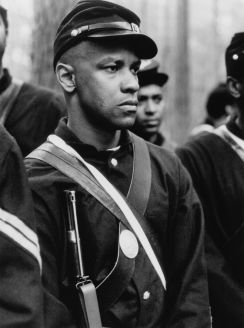
In the movie Glory, one scene portrays a Union regiment of freed slaves, the 54th Massachusetts, sitting around a campfire on the night before the big battle.

The fire crackles, the cicadas chirp, and several of the men hum a spiritual in union as they clean their rifles.  They know that on the morrow their lives will be on the line, and they must seize the day.

One soldier looks up from the fire at his fellows, willing them to give him eye contact.

He says, “We men, ain’t we?”

That says it all, doesn’t it?

We’re men.

Men.

We’ll face the danger.

We’ll take the risks.

We’ll absorb the pain.

We’ll square our shoulders and–for the sake of heaven–we’ll look death and hell square in the eyes.

And it will be this generation that gets it done.

You and me.

To paraphrase Churchill, when masculinity has endured a thousand more years, may they say that this day was among its finest hours.

Listen to the apostle’s battle cry: “The night is almost gone, and the day is at hand.  Let us therefore lay aside the deeds of darkness and put on the armor of light” (Romans 13:12).

Stu Weber, All The King’s Men, “Rusty Knights in a Hostile Land,” 52